Our crew at work in the trees
Tree Work Photos from Eugene, Oregon and Lane County
Real photos of rope climbing, sectional takedowns, canopy pruning and finished hedge work from our own jobs.
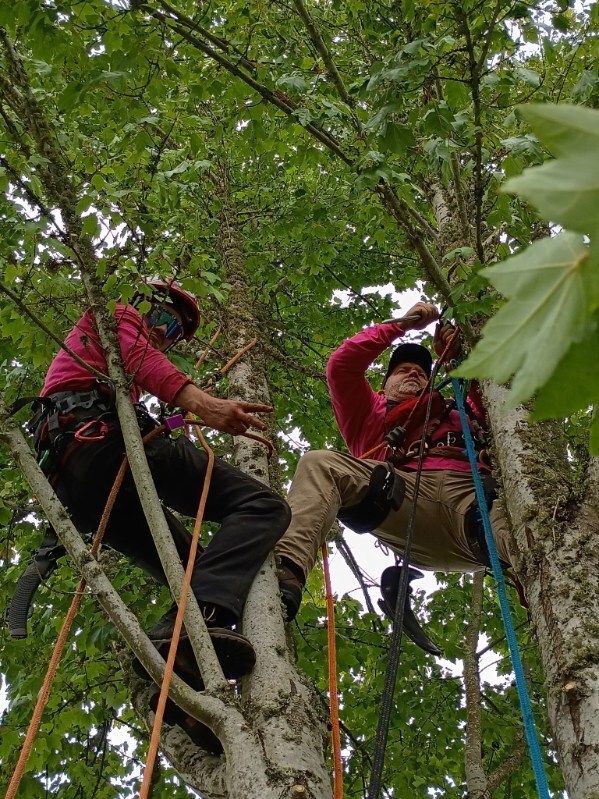
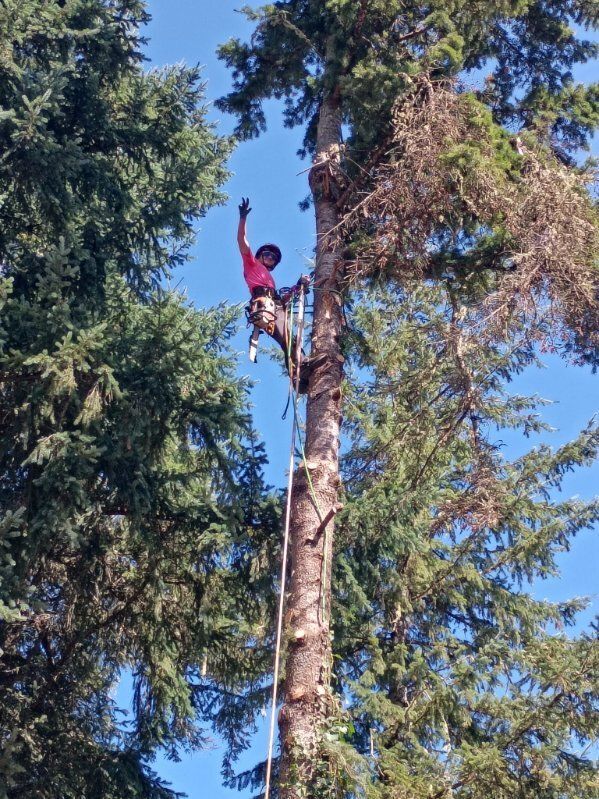
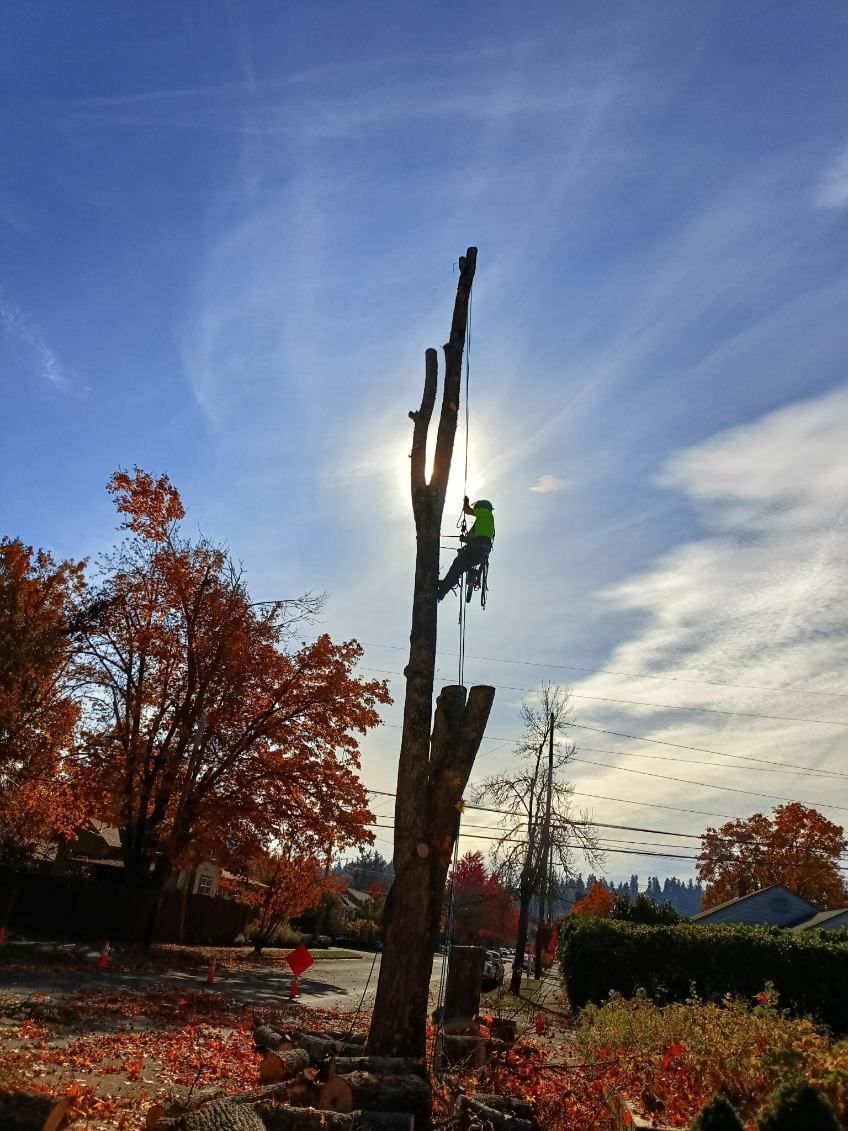
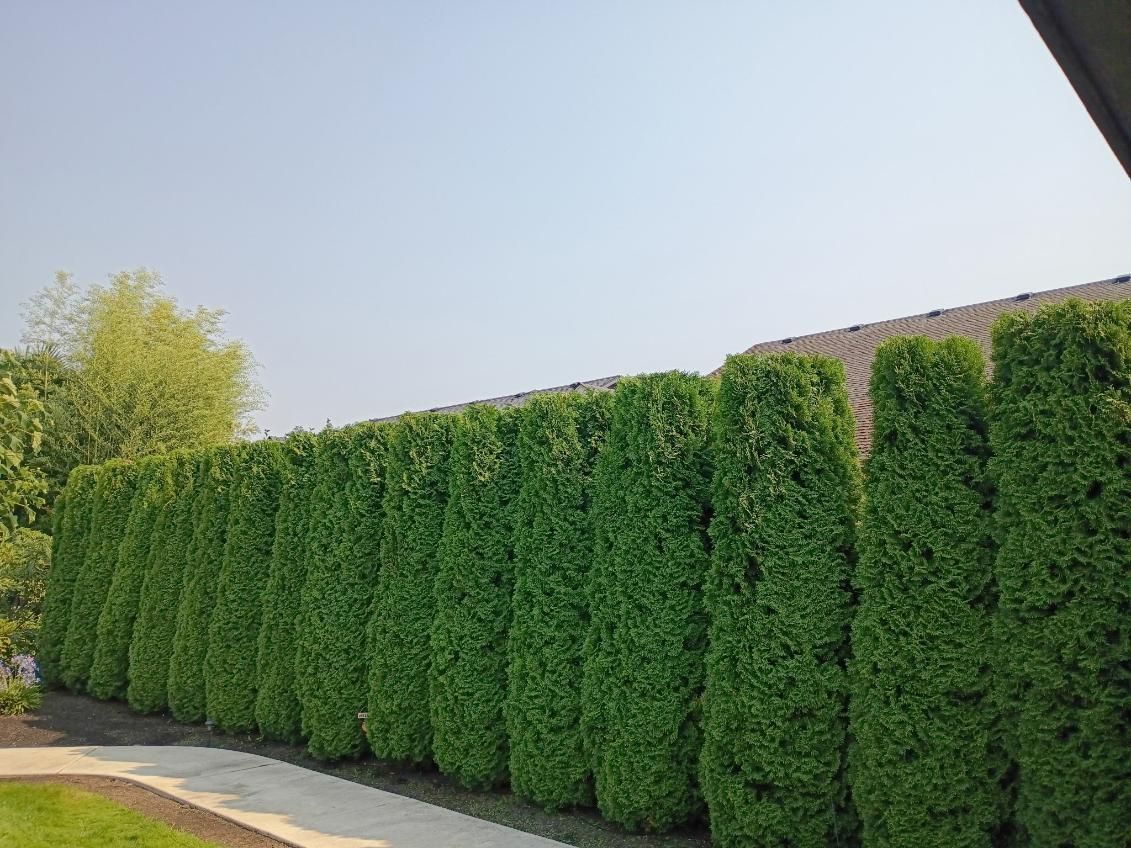
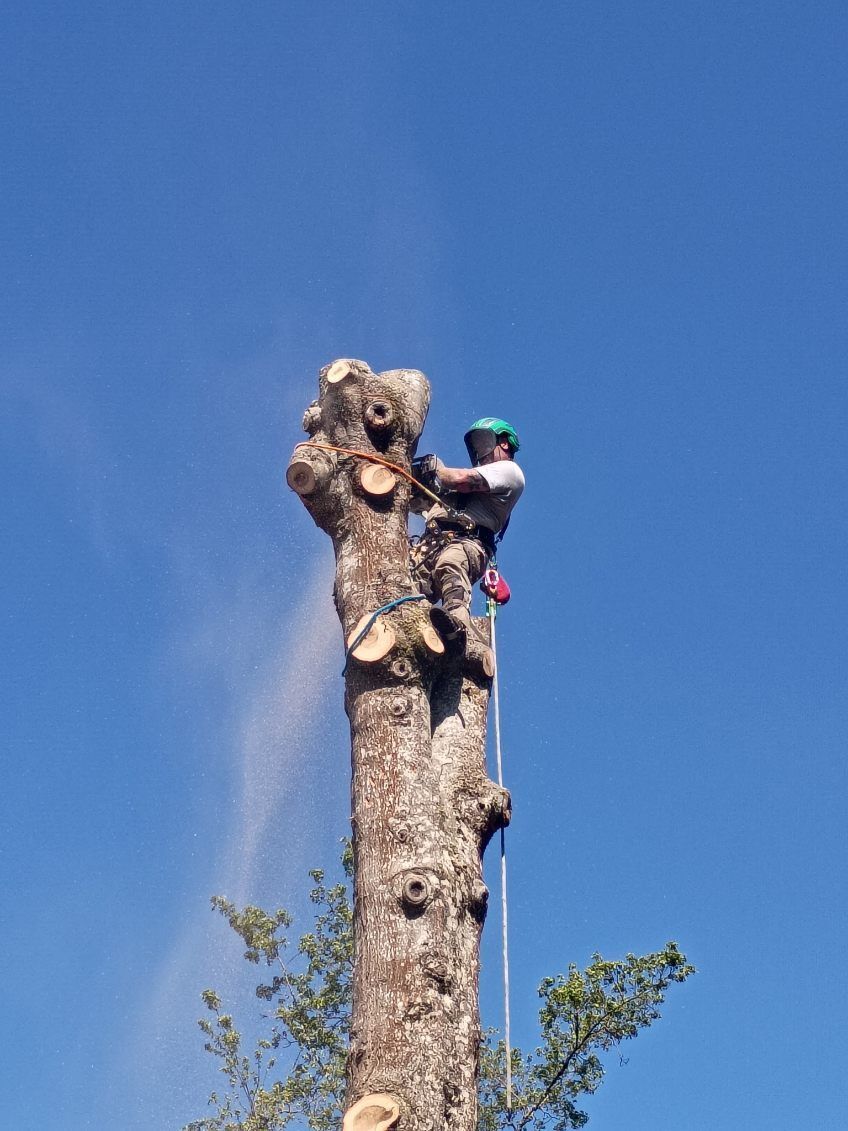
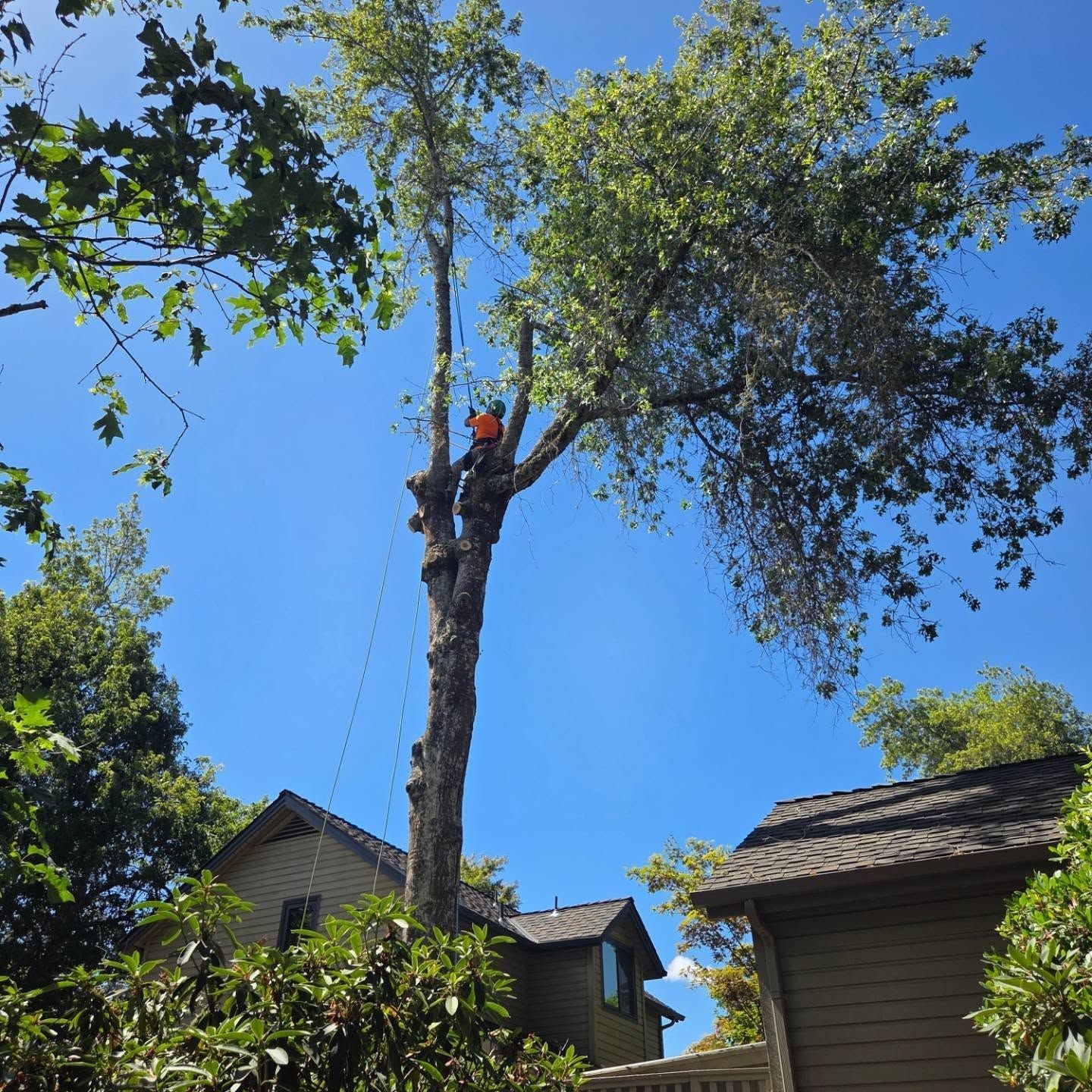
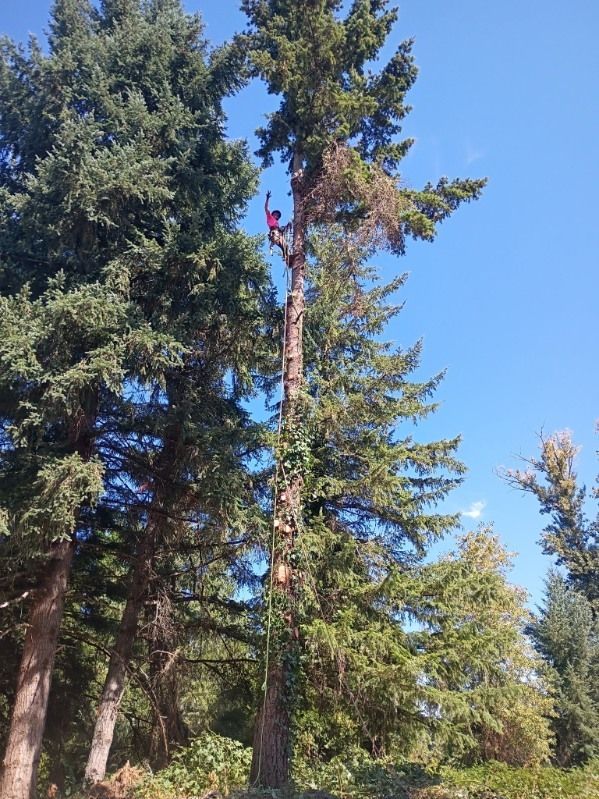
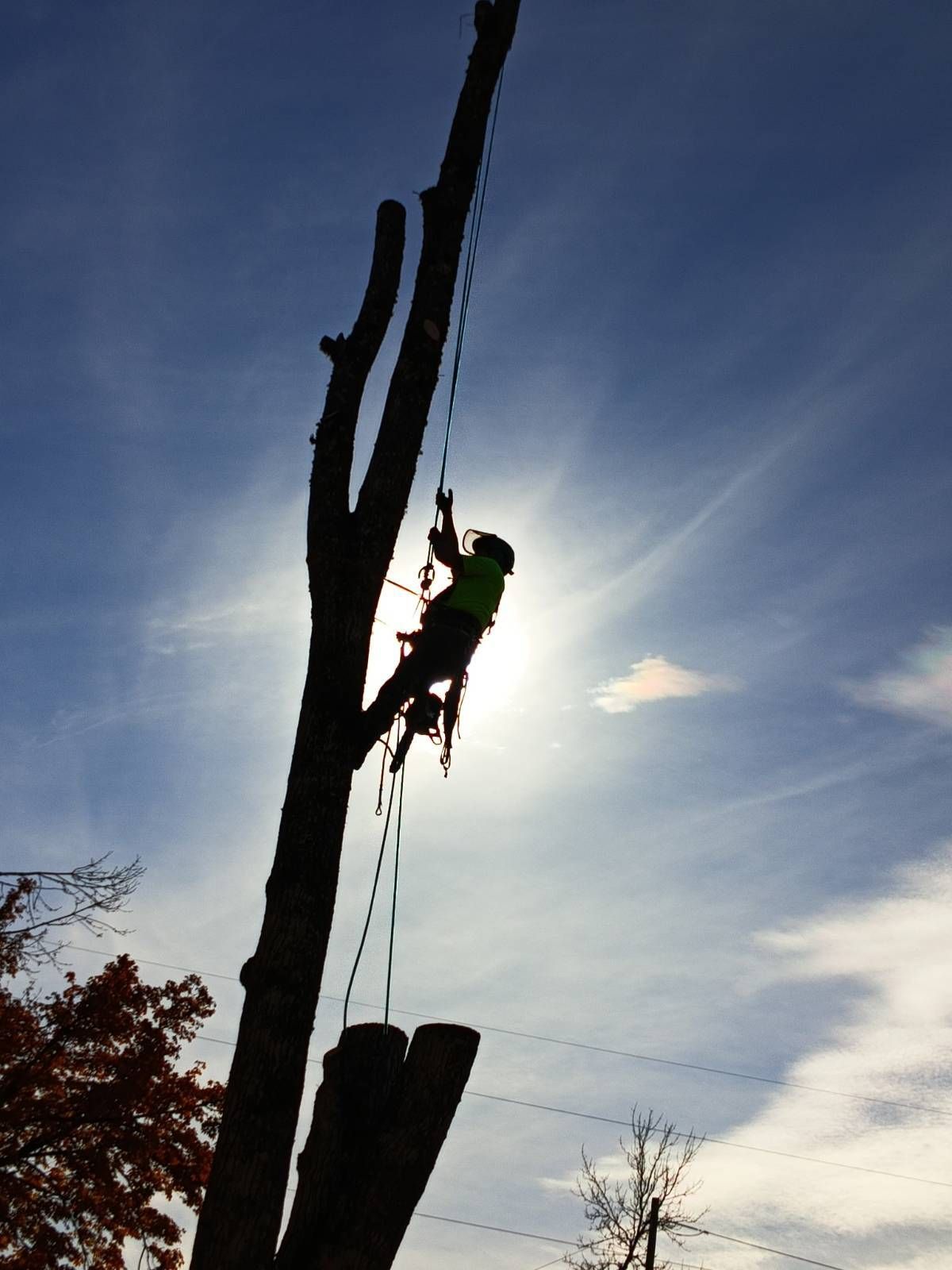
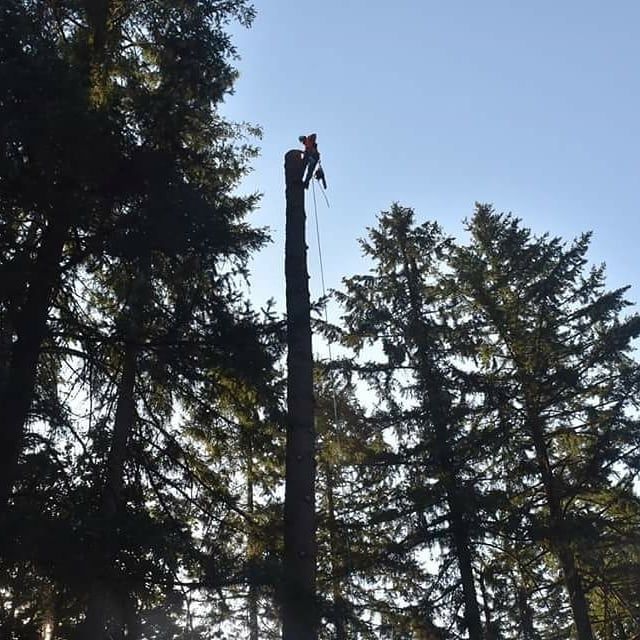
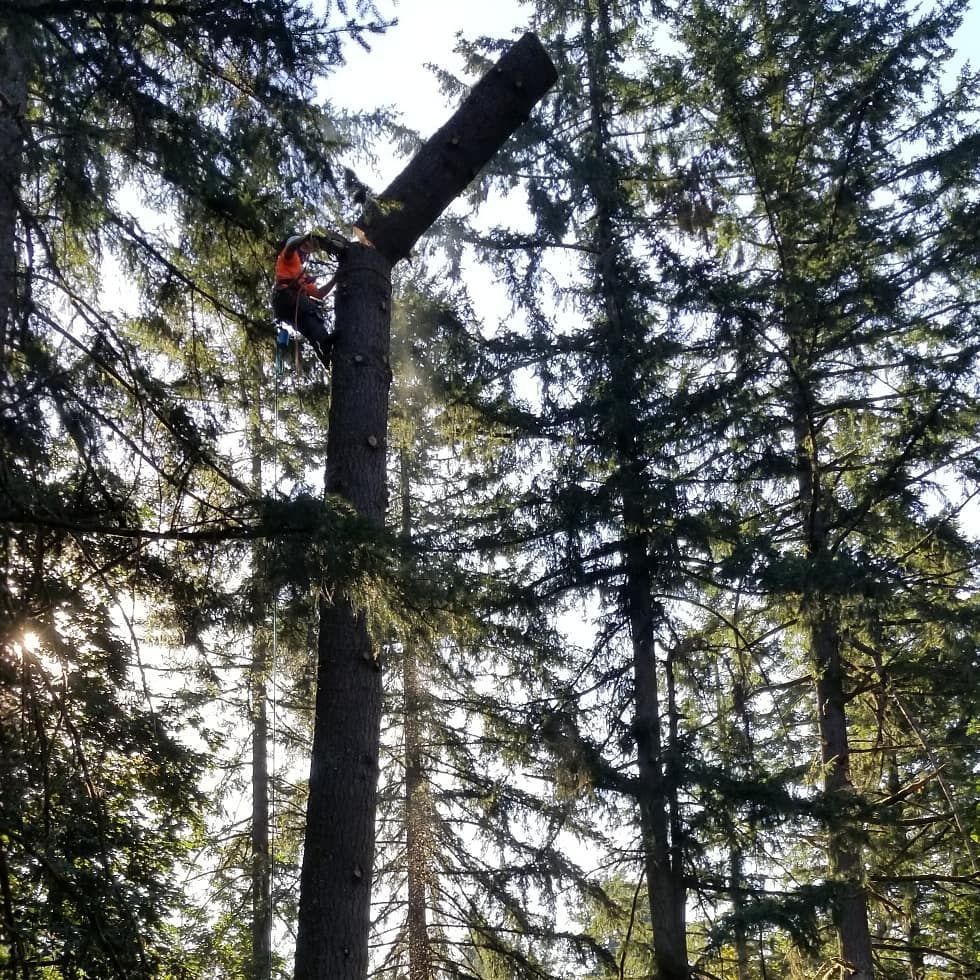
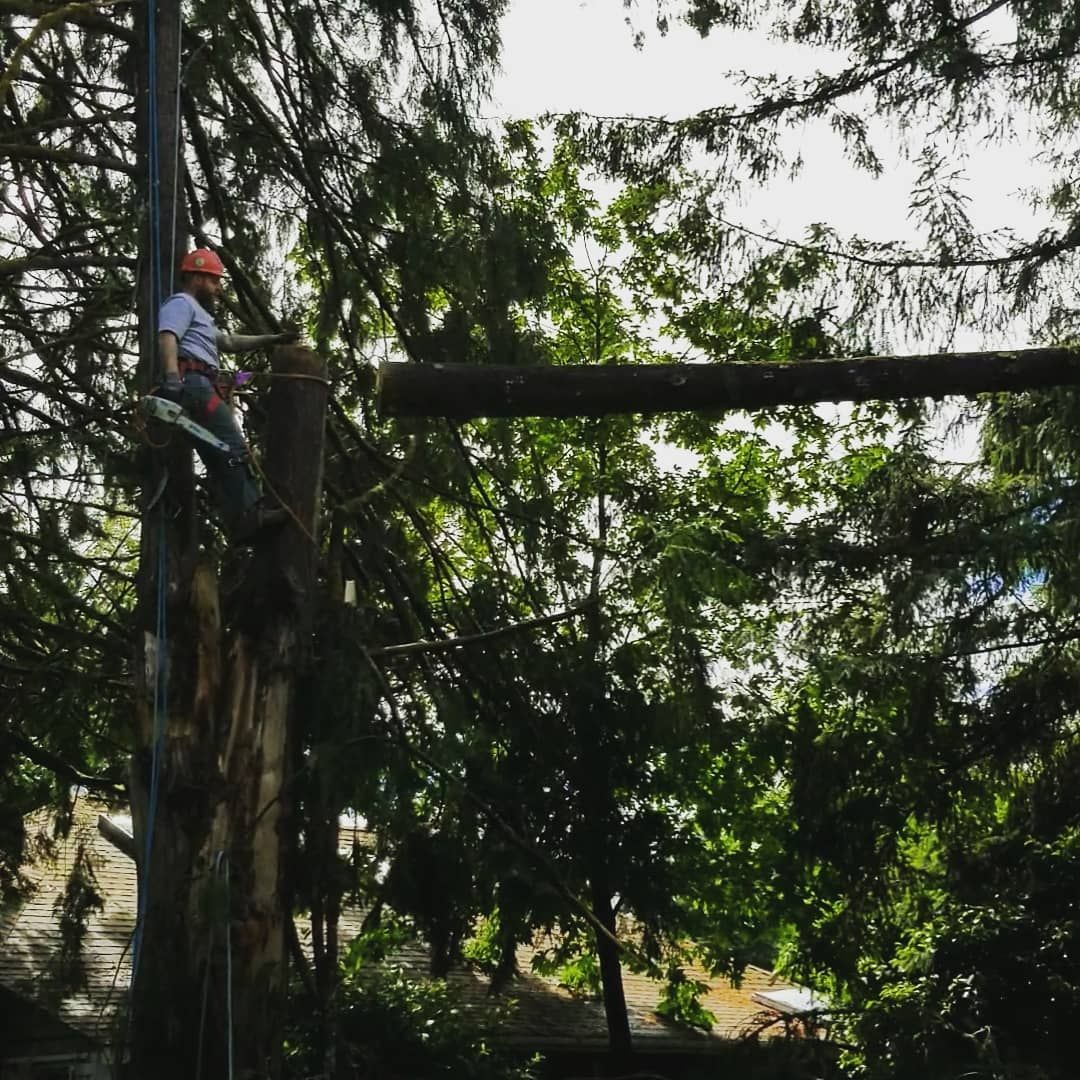
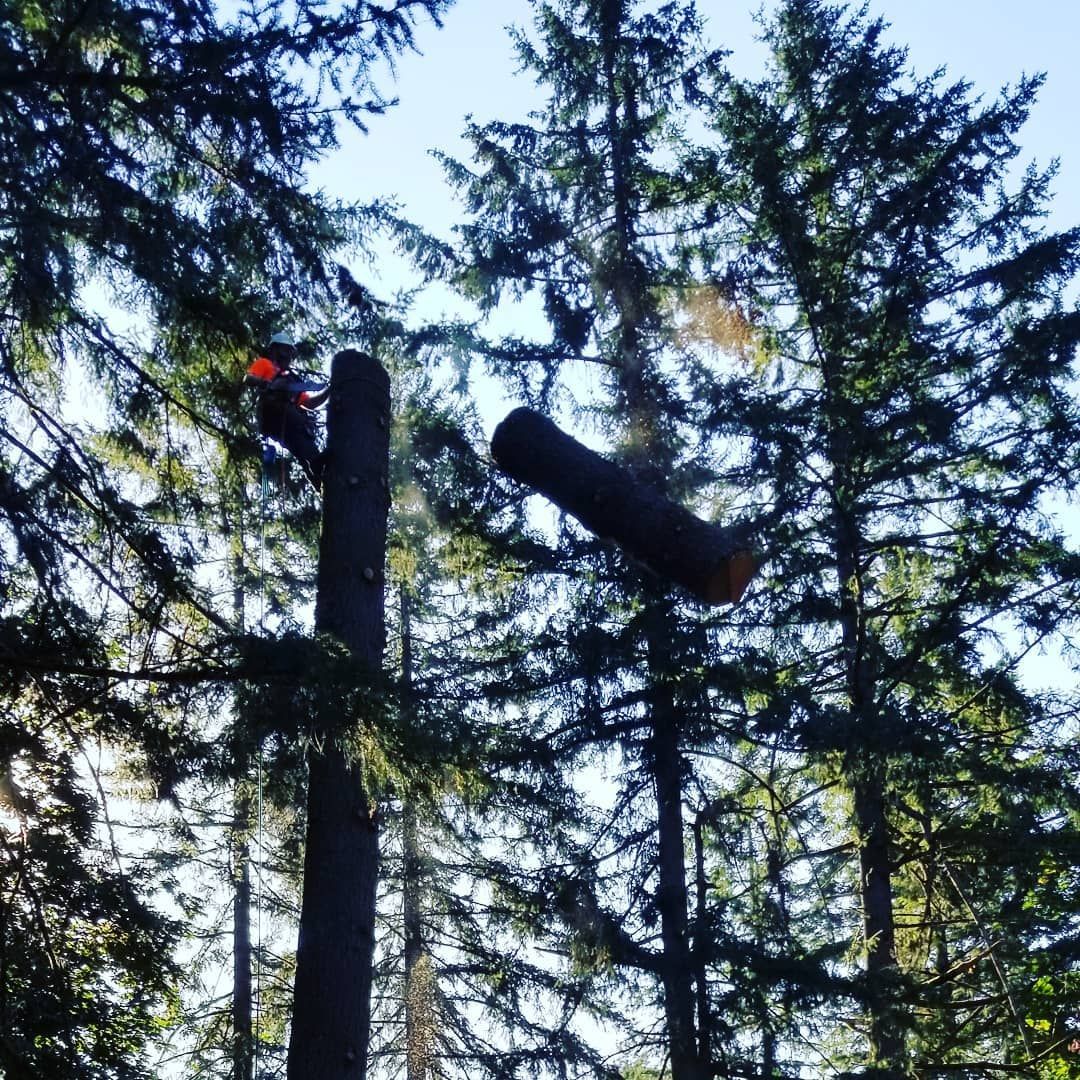
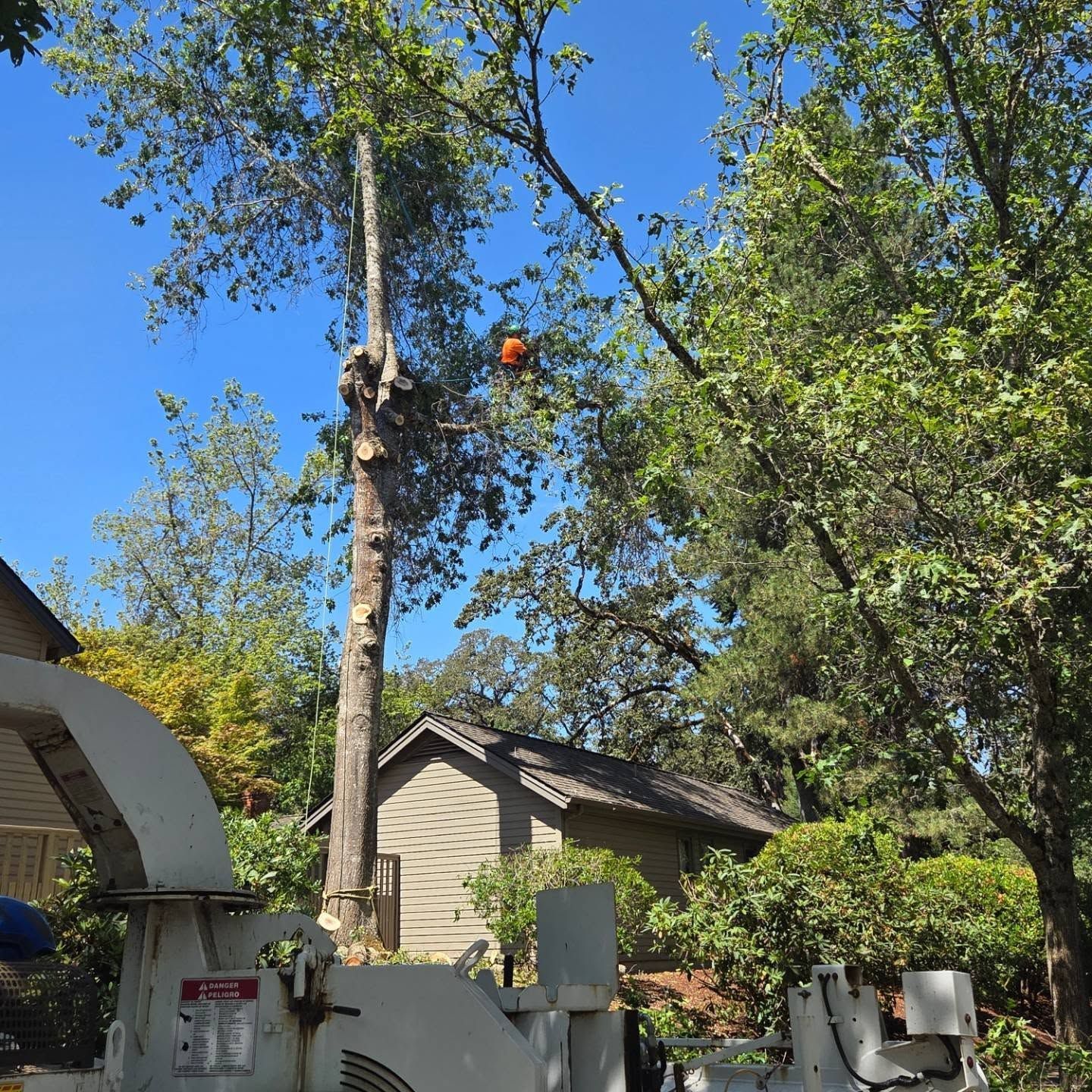
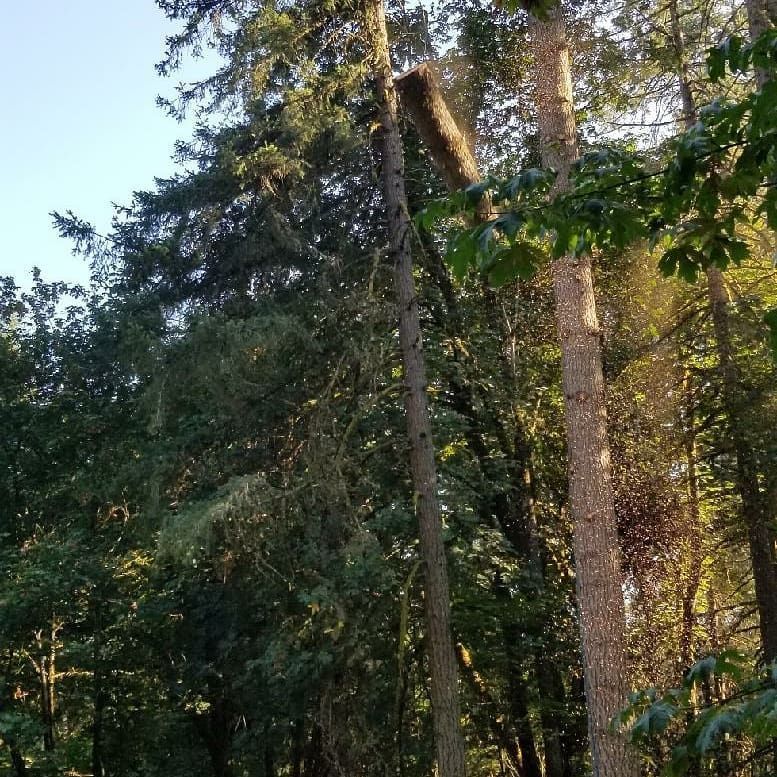
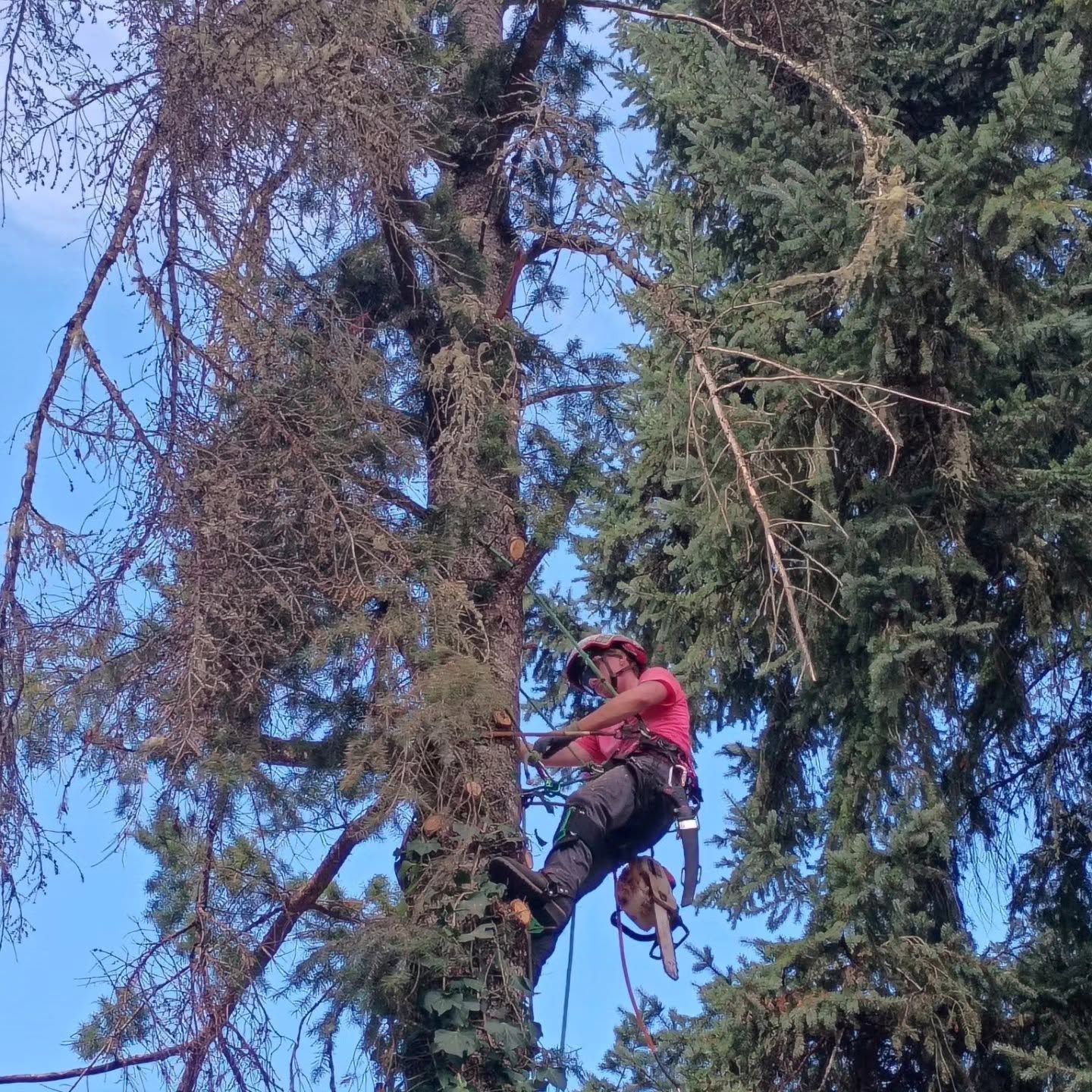
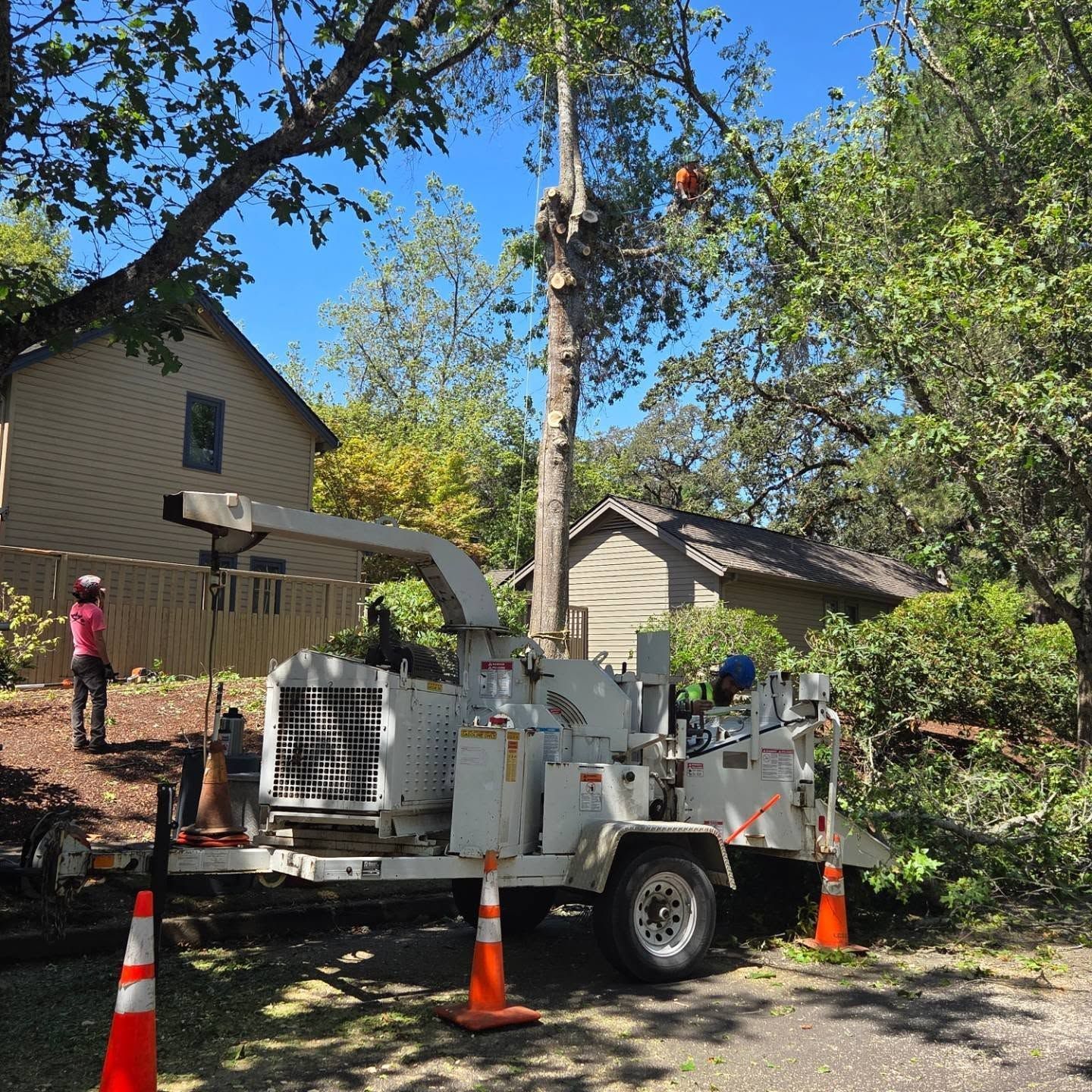
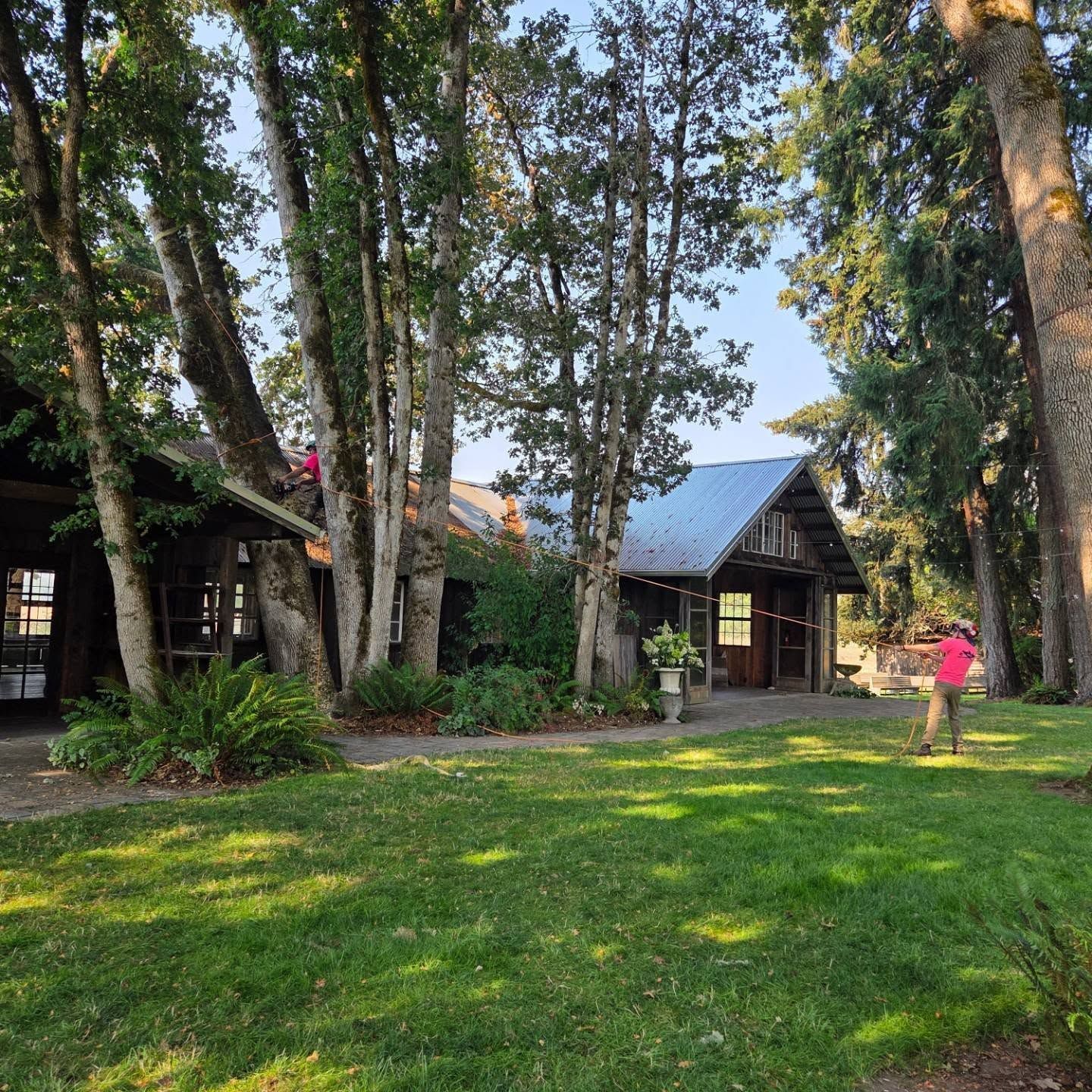
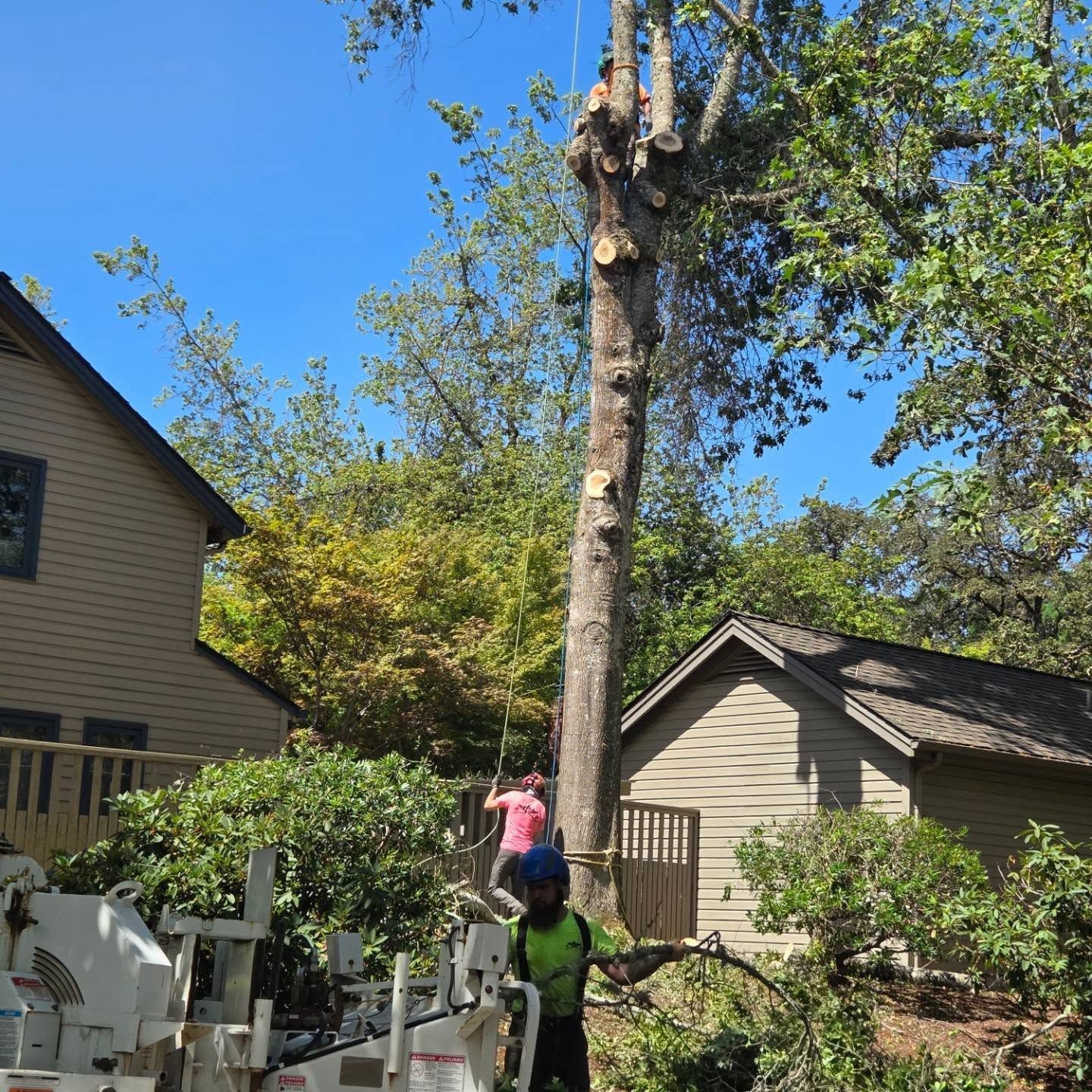
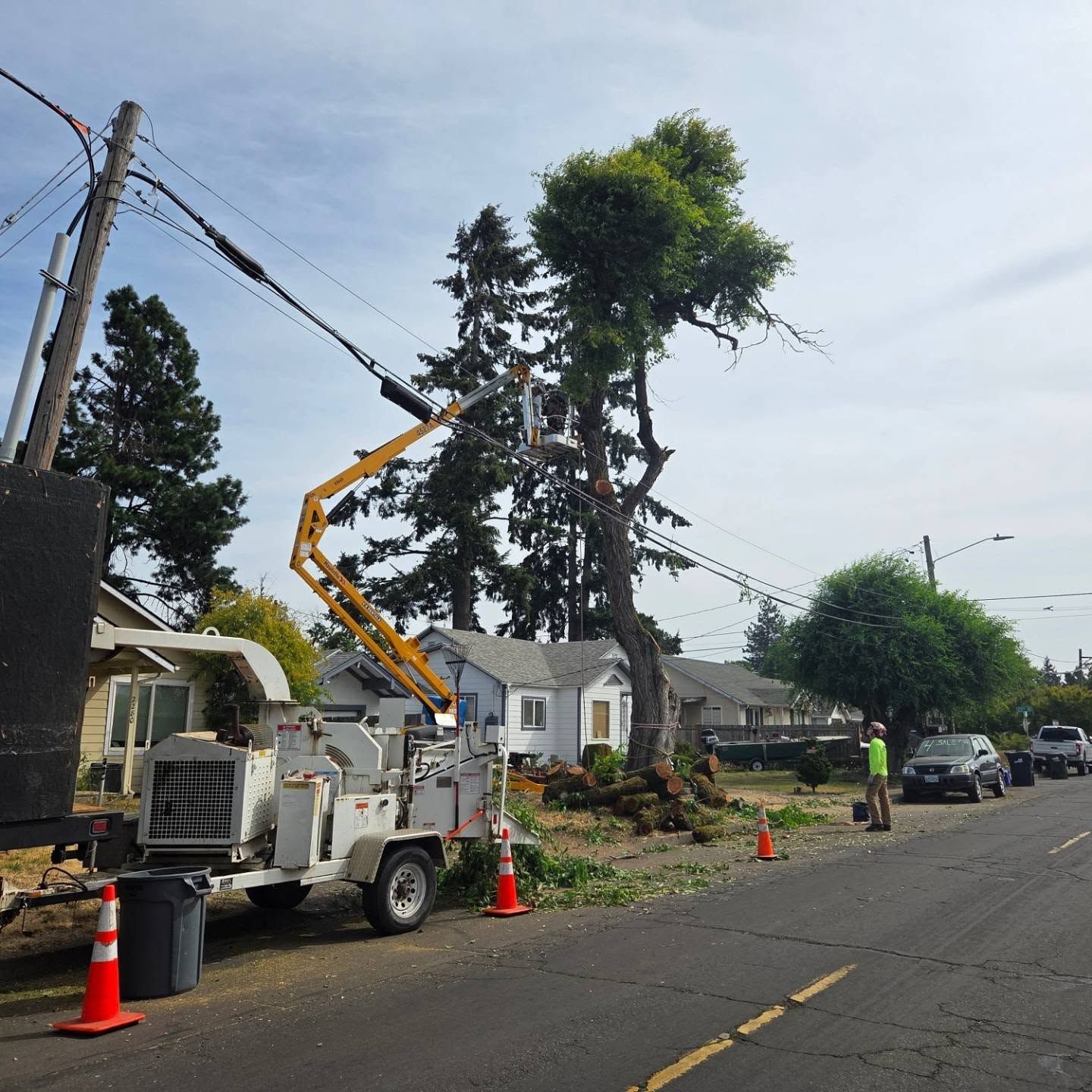

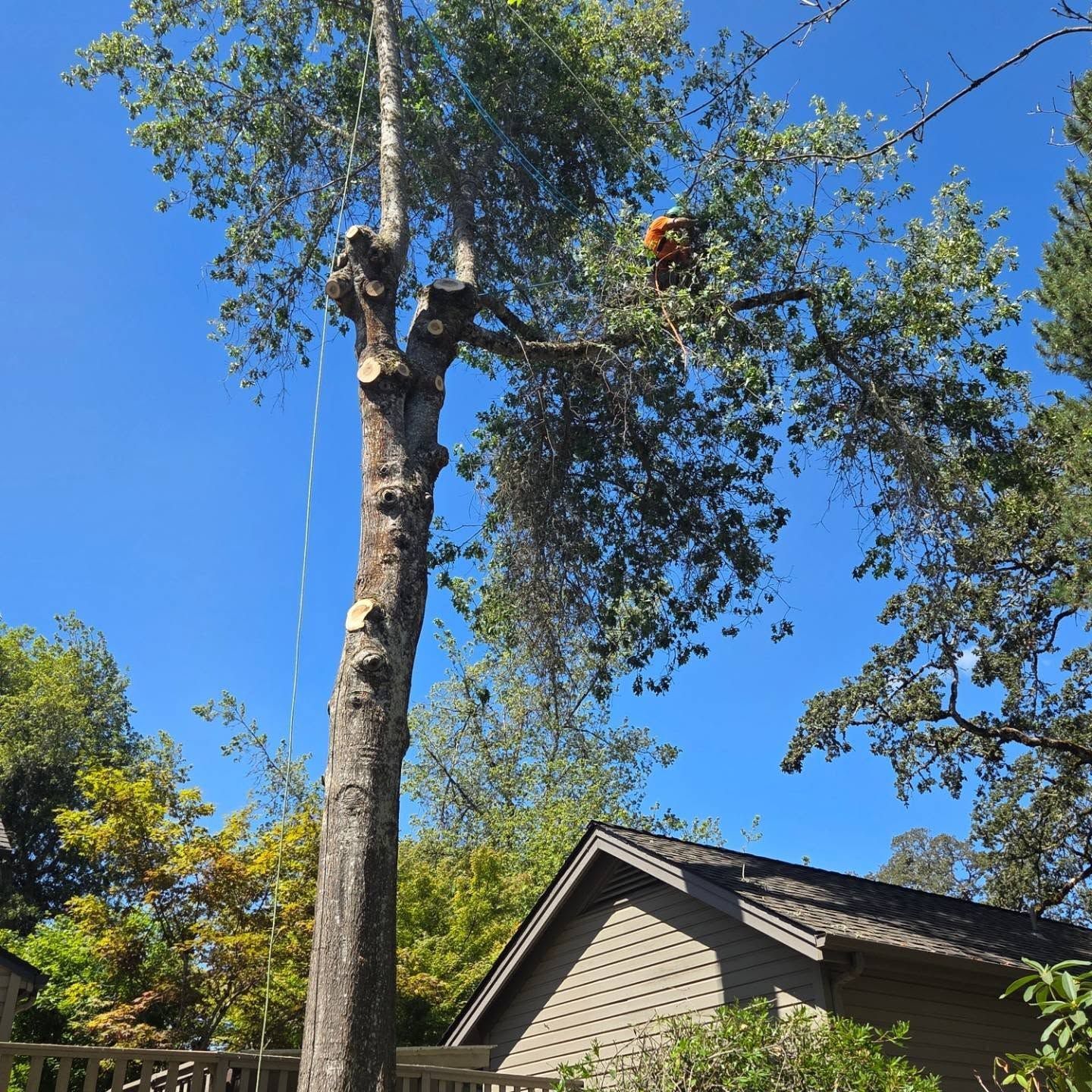
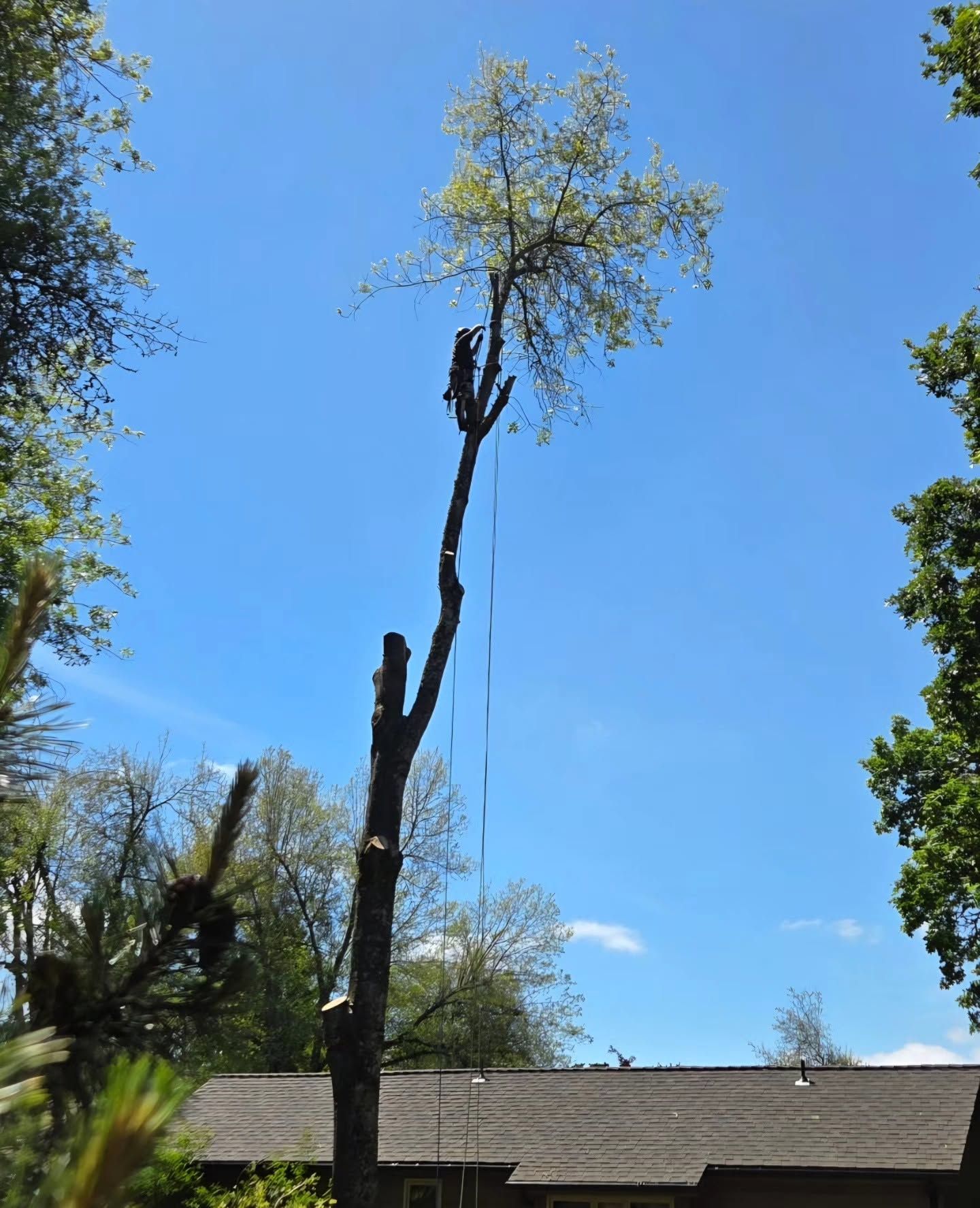
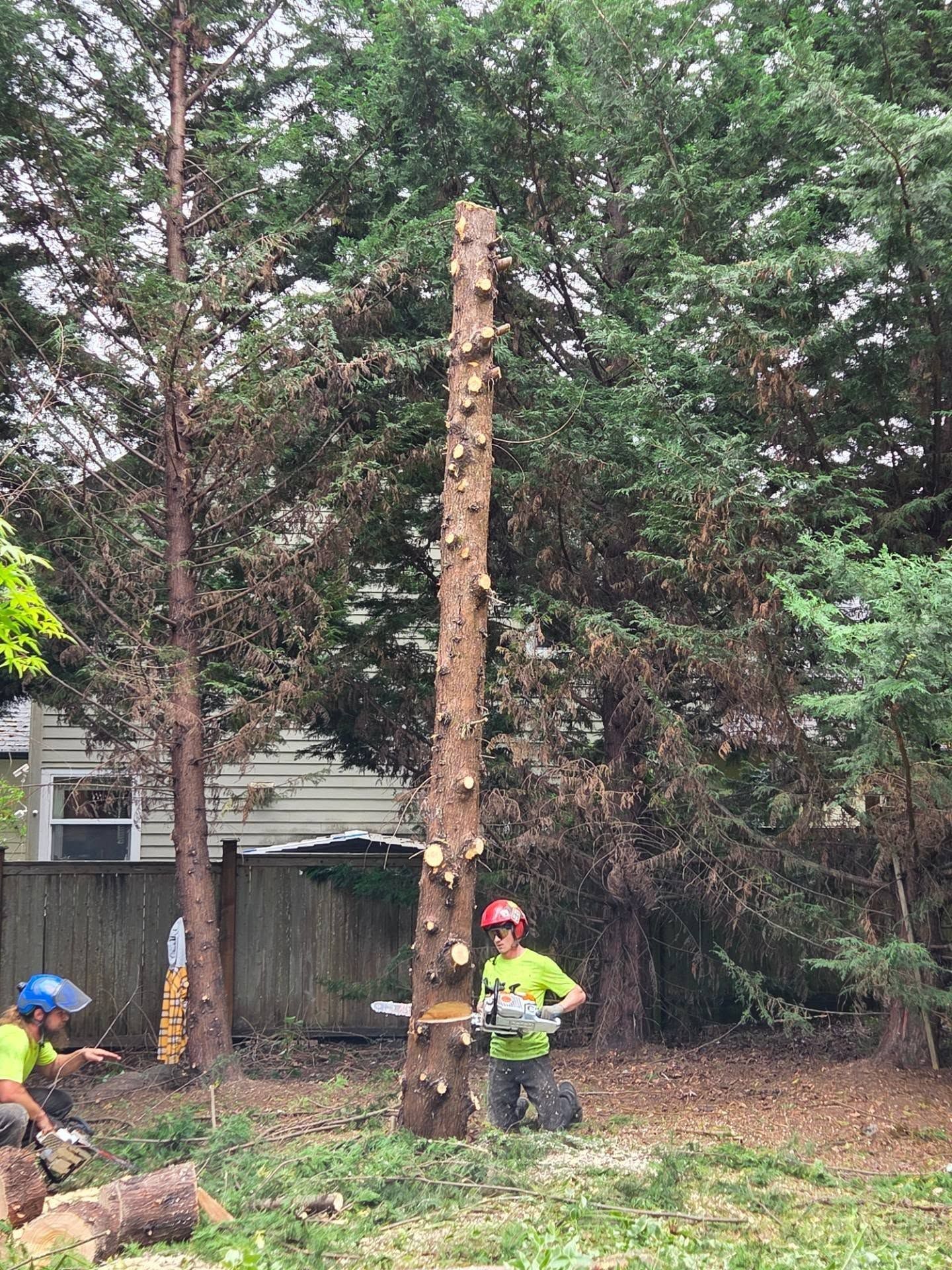
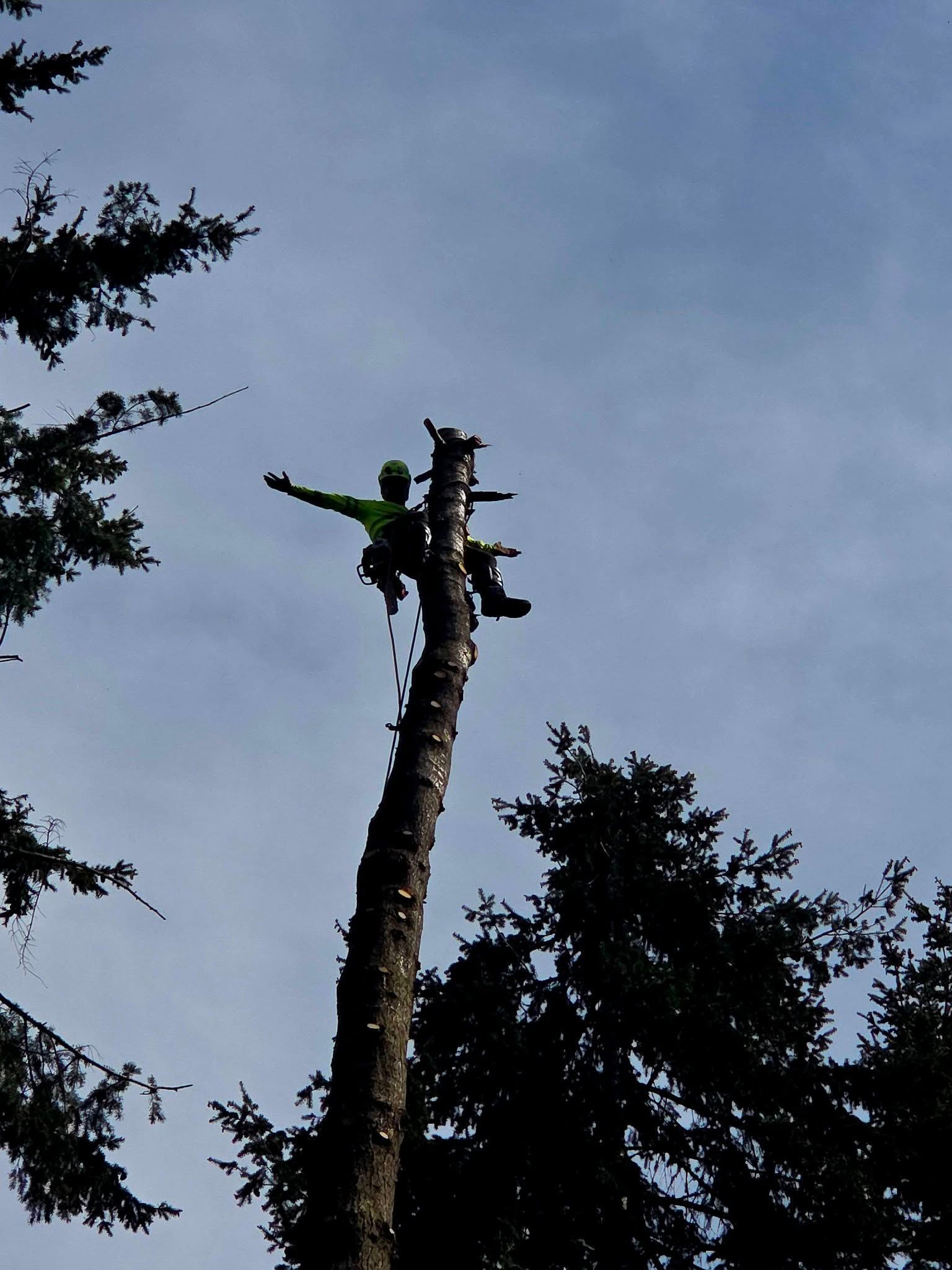
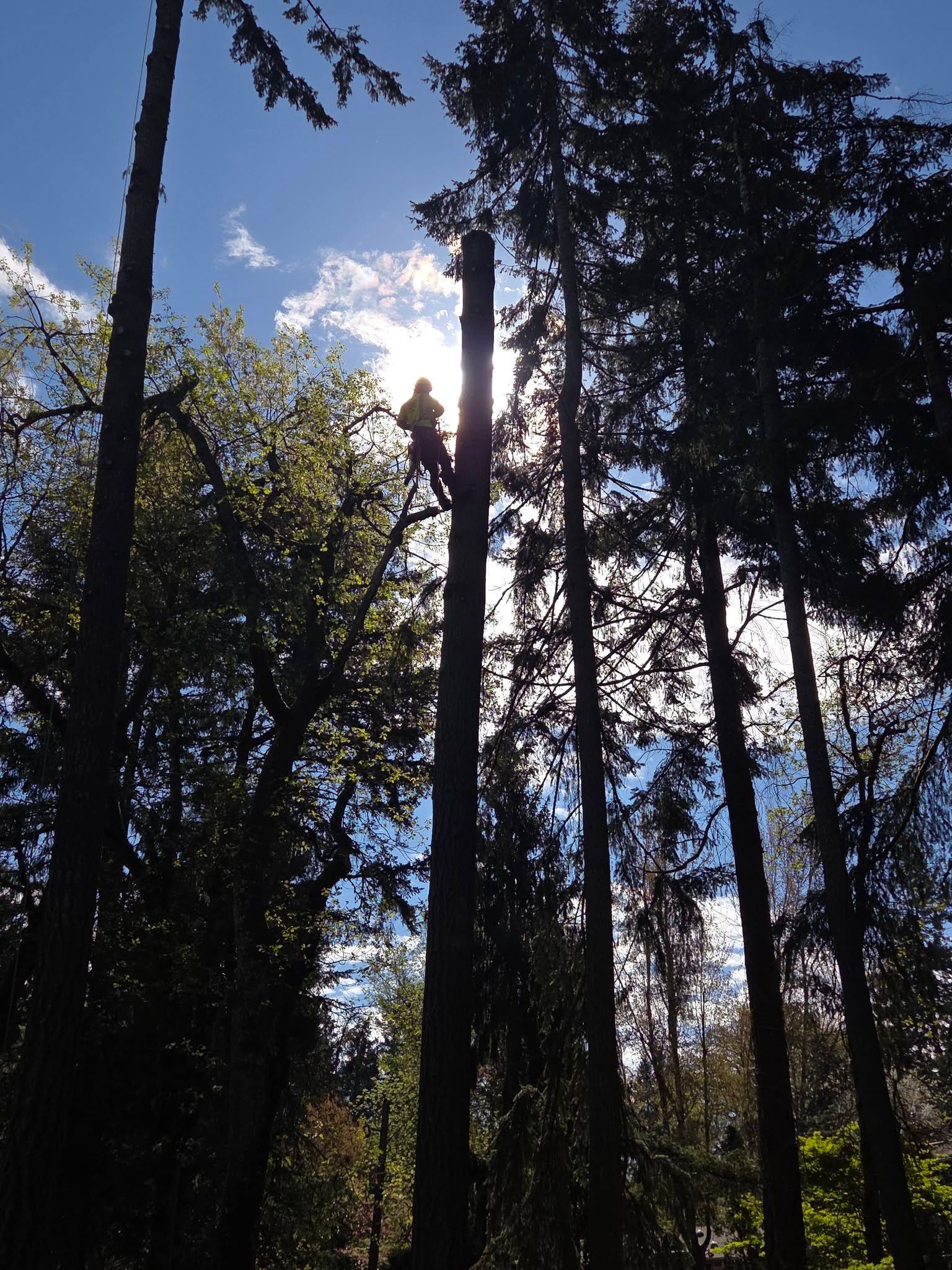
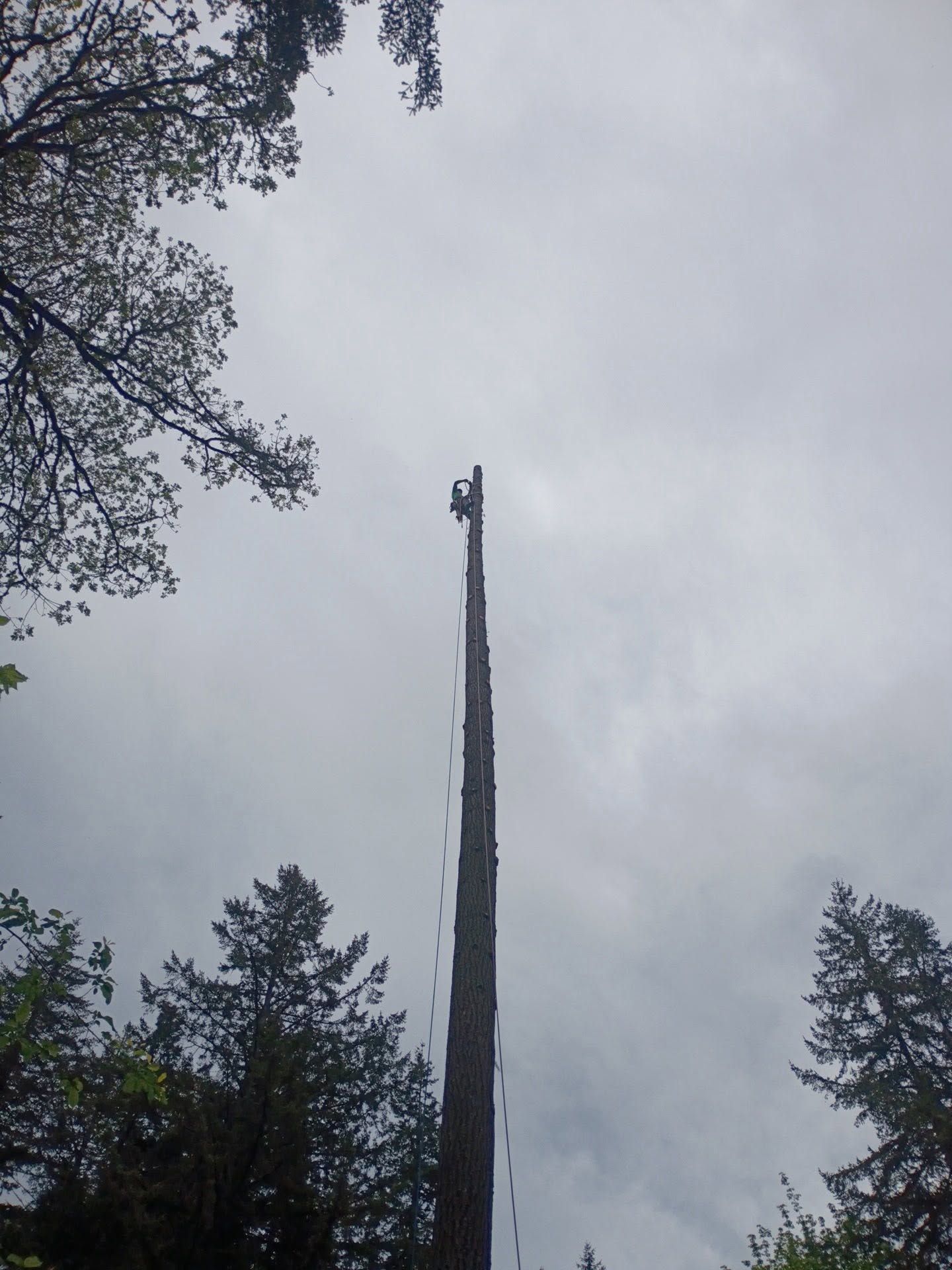
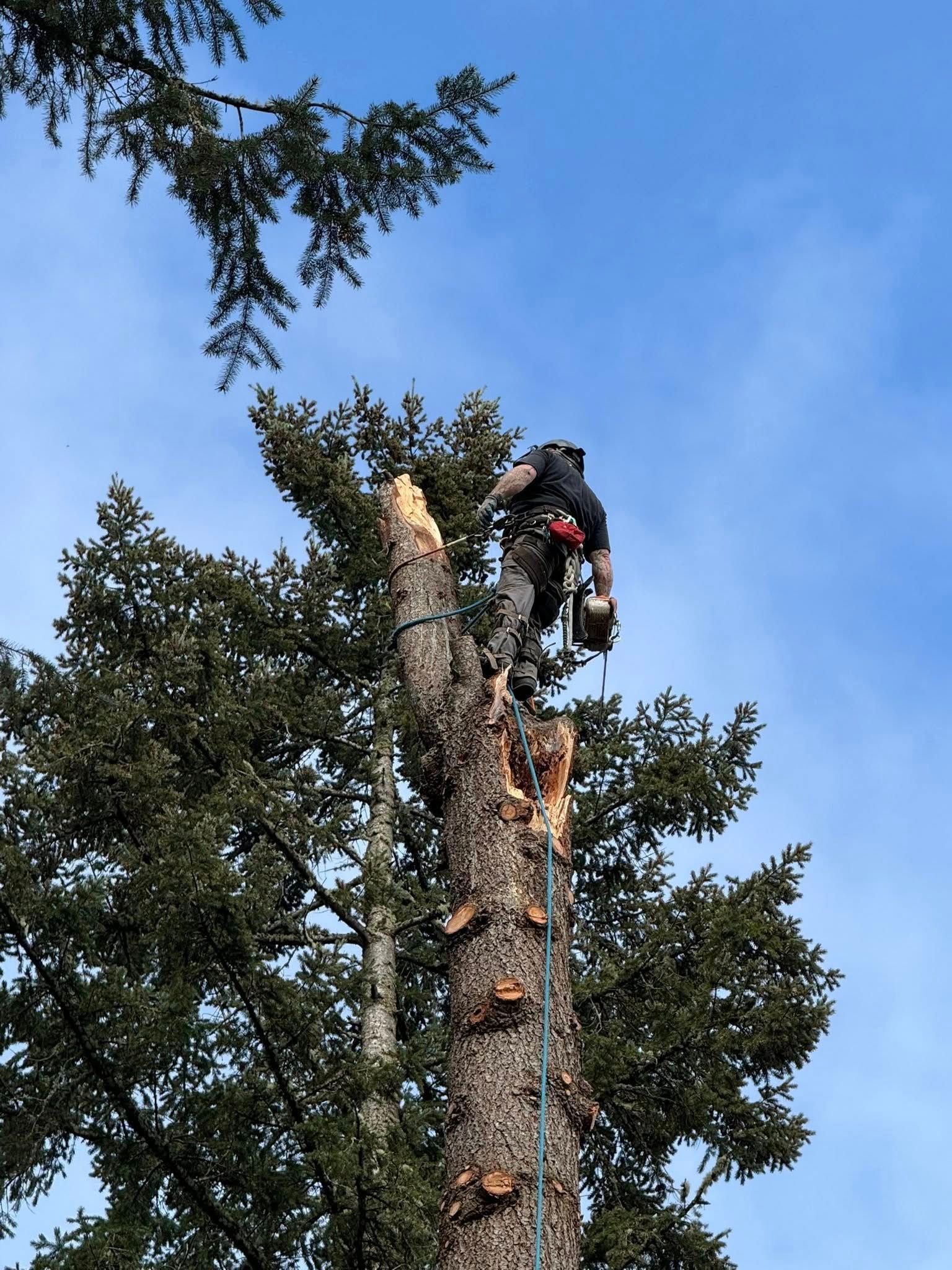

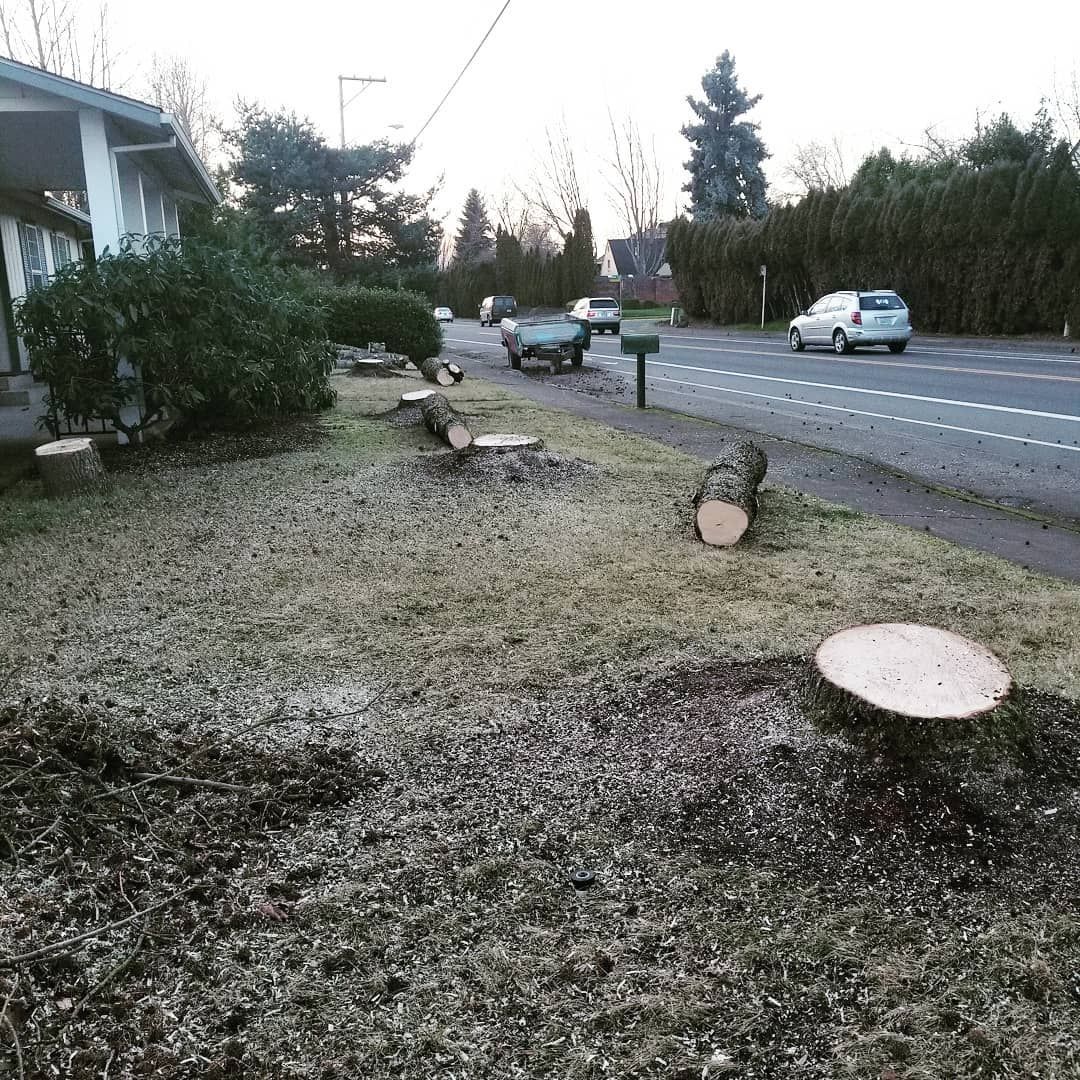
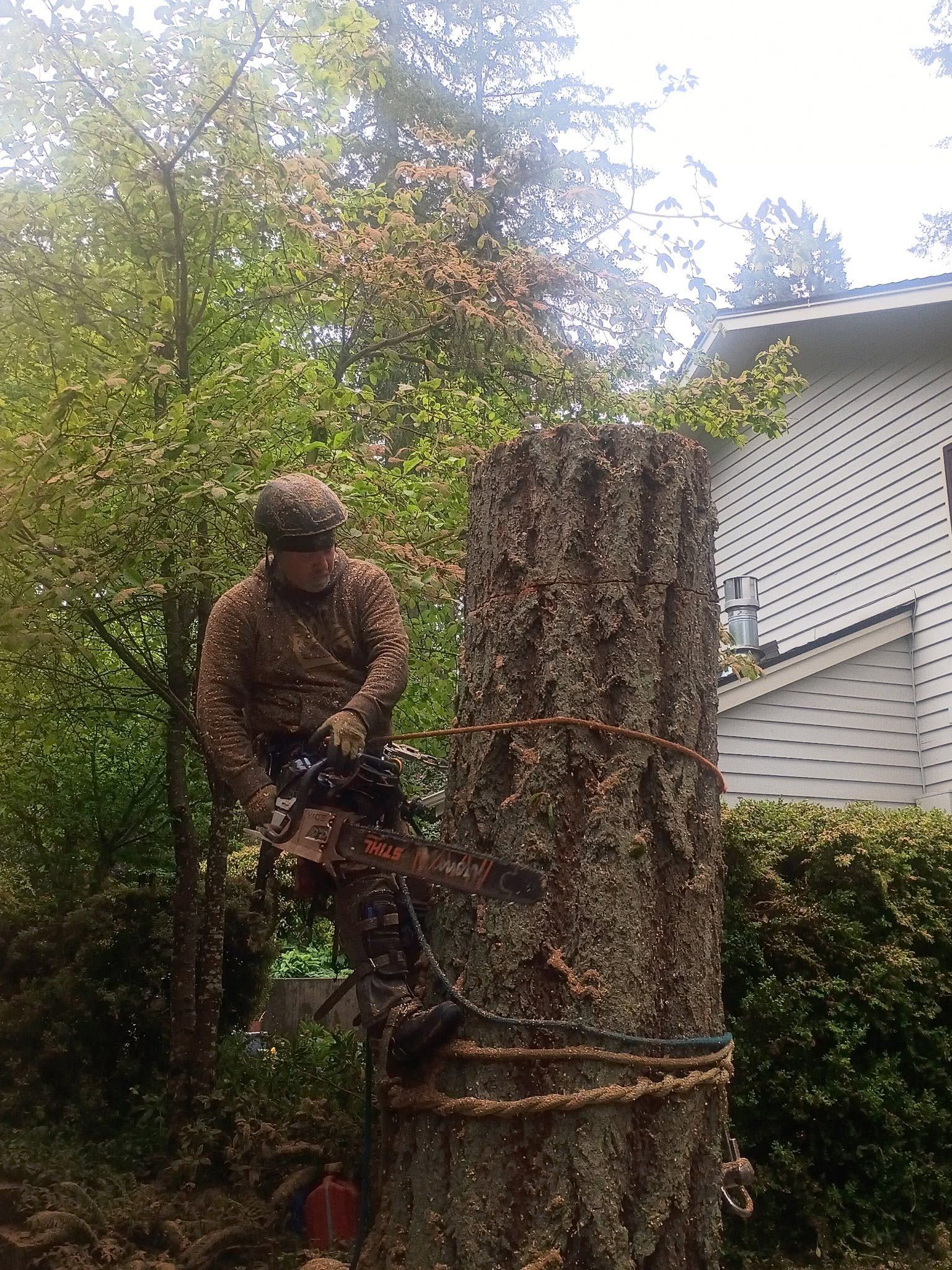
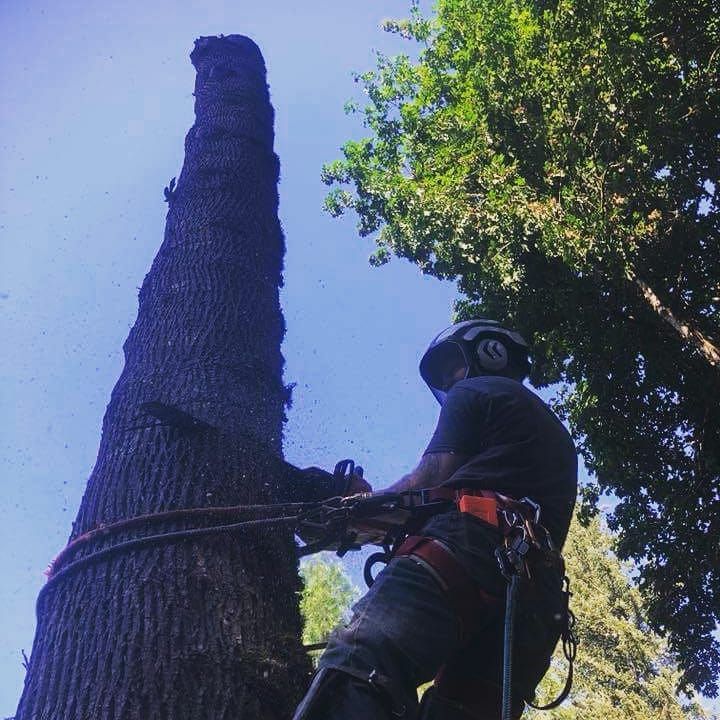
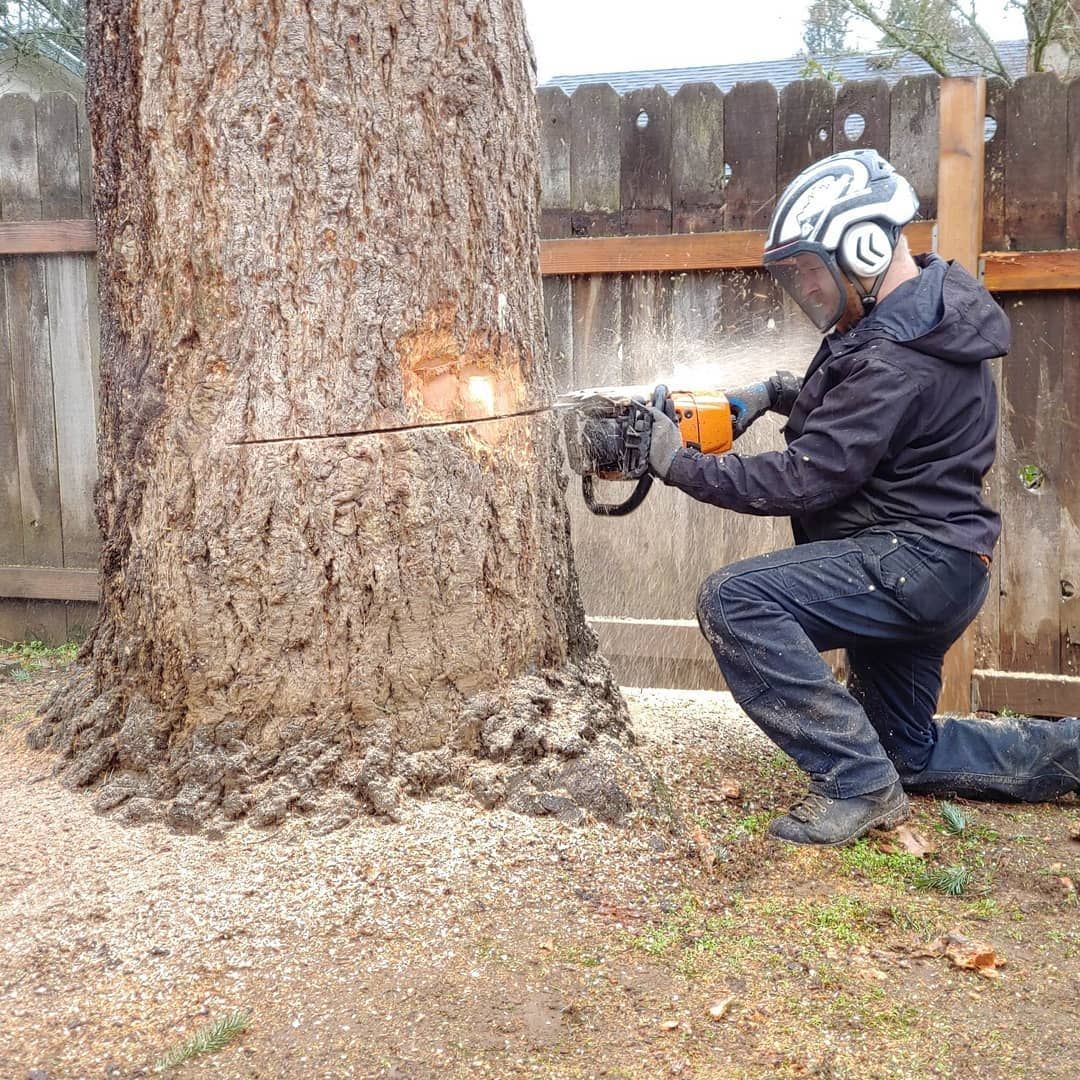
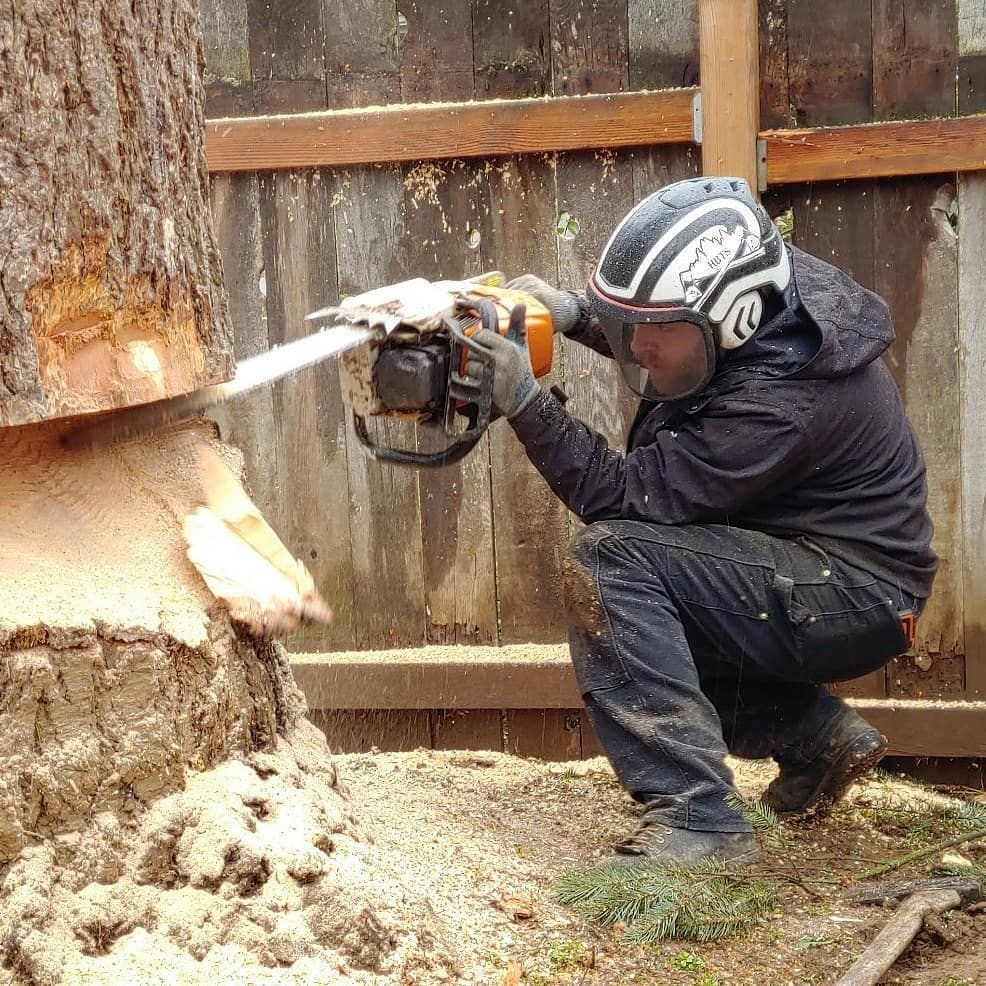
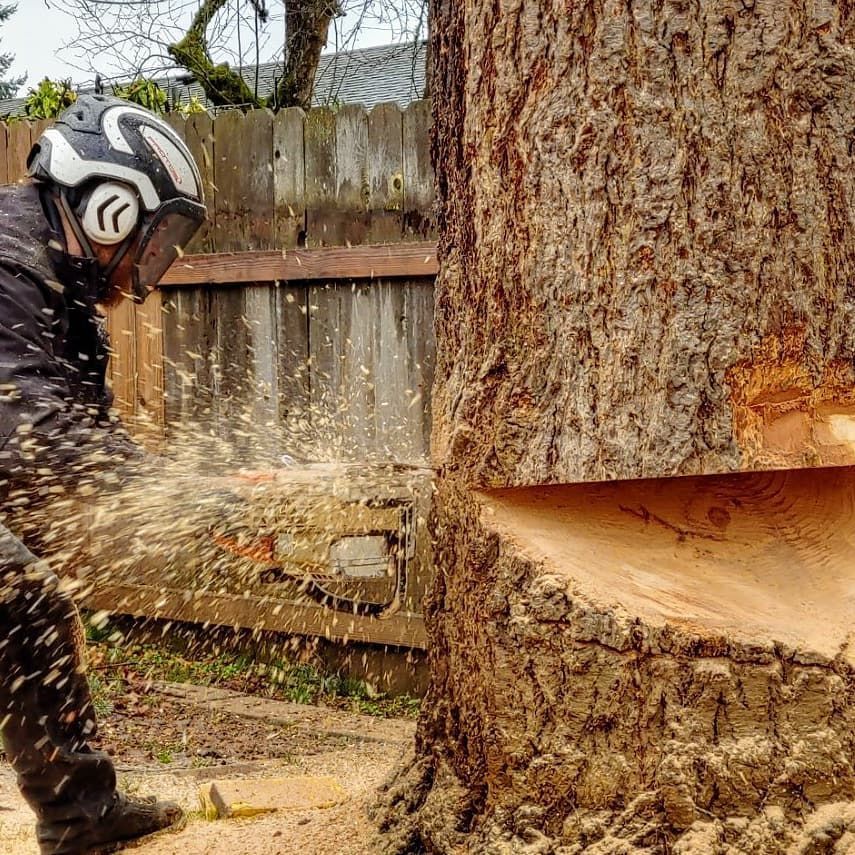
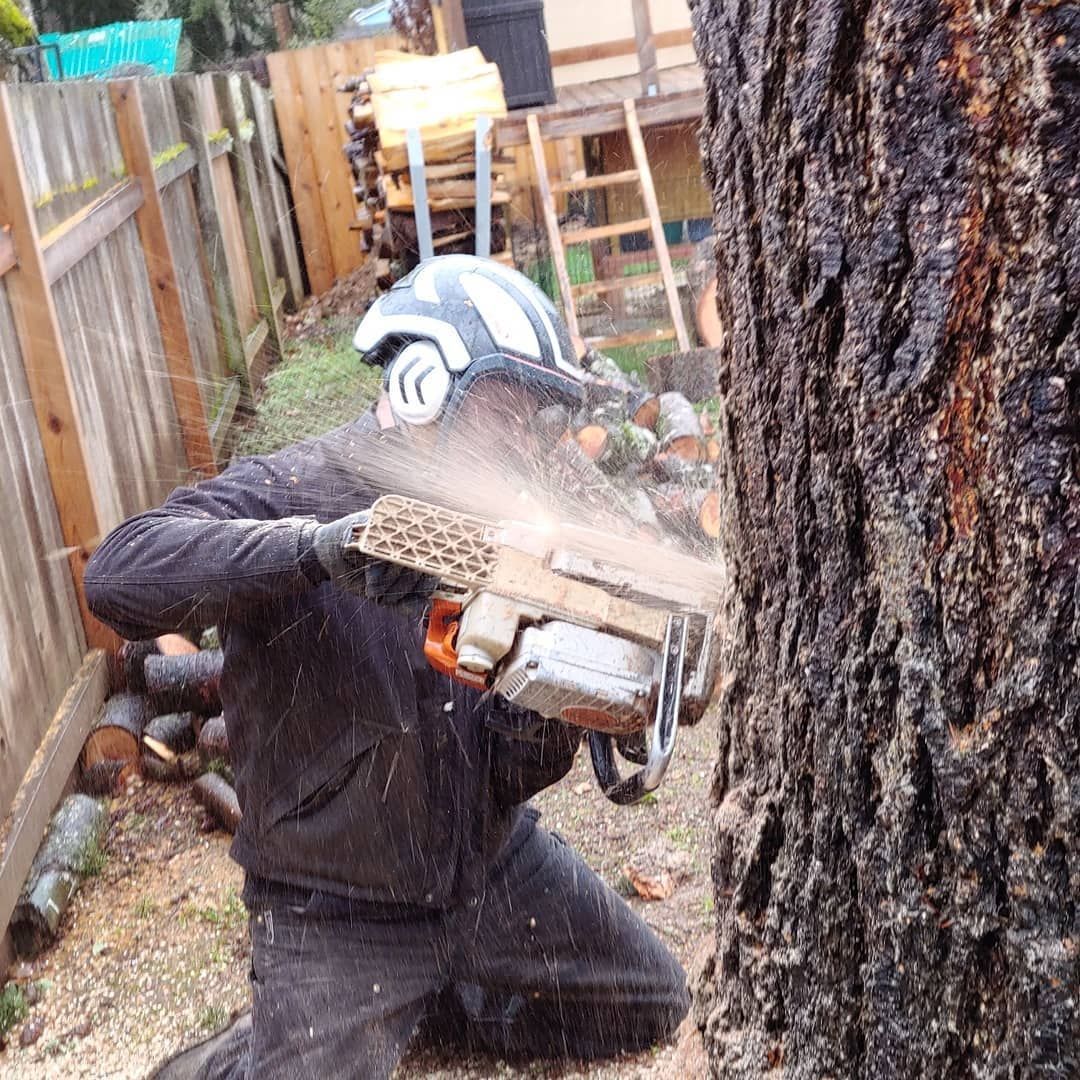
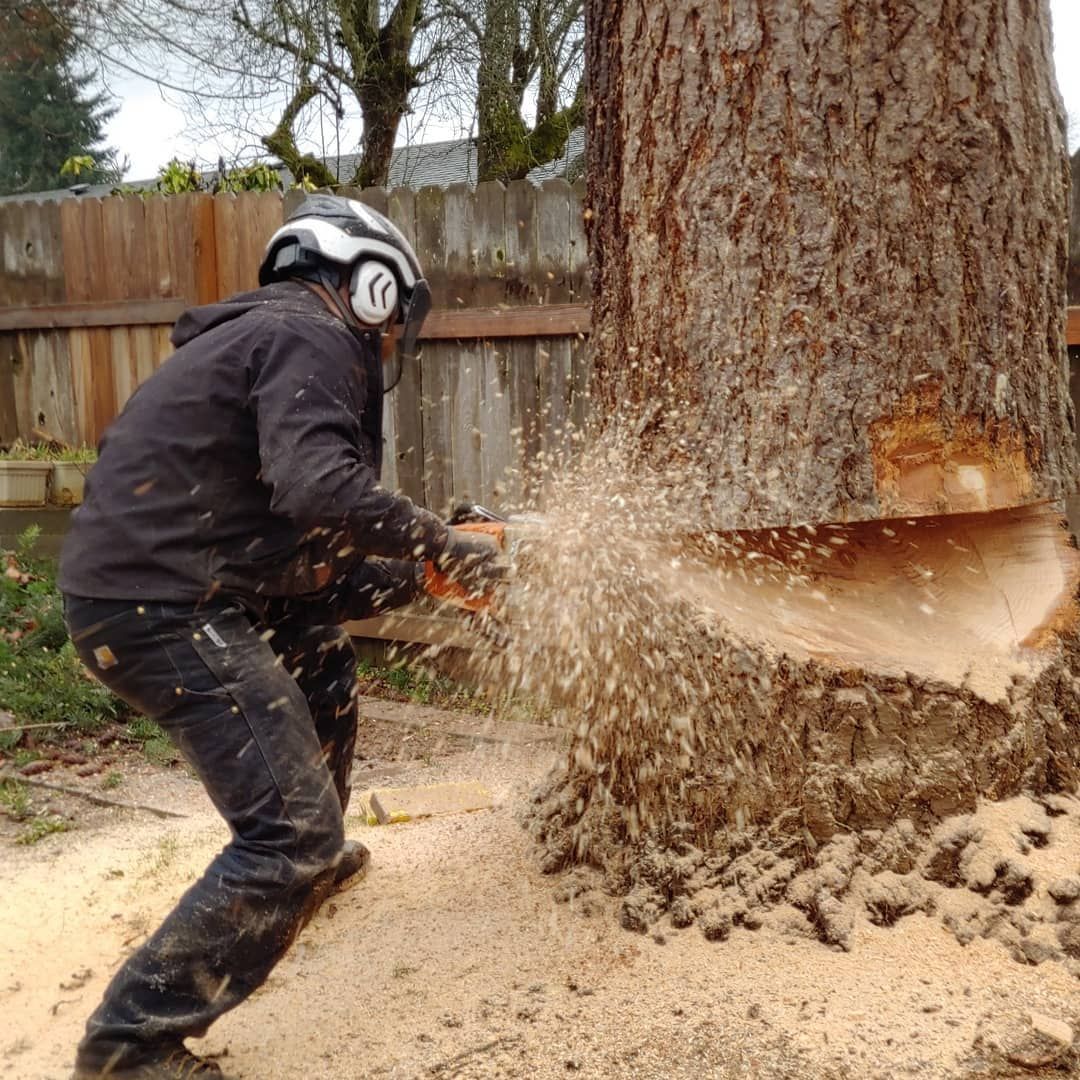
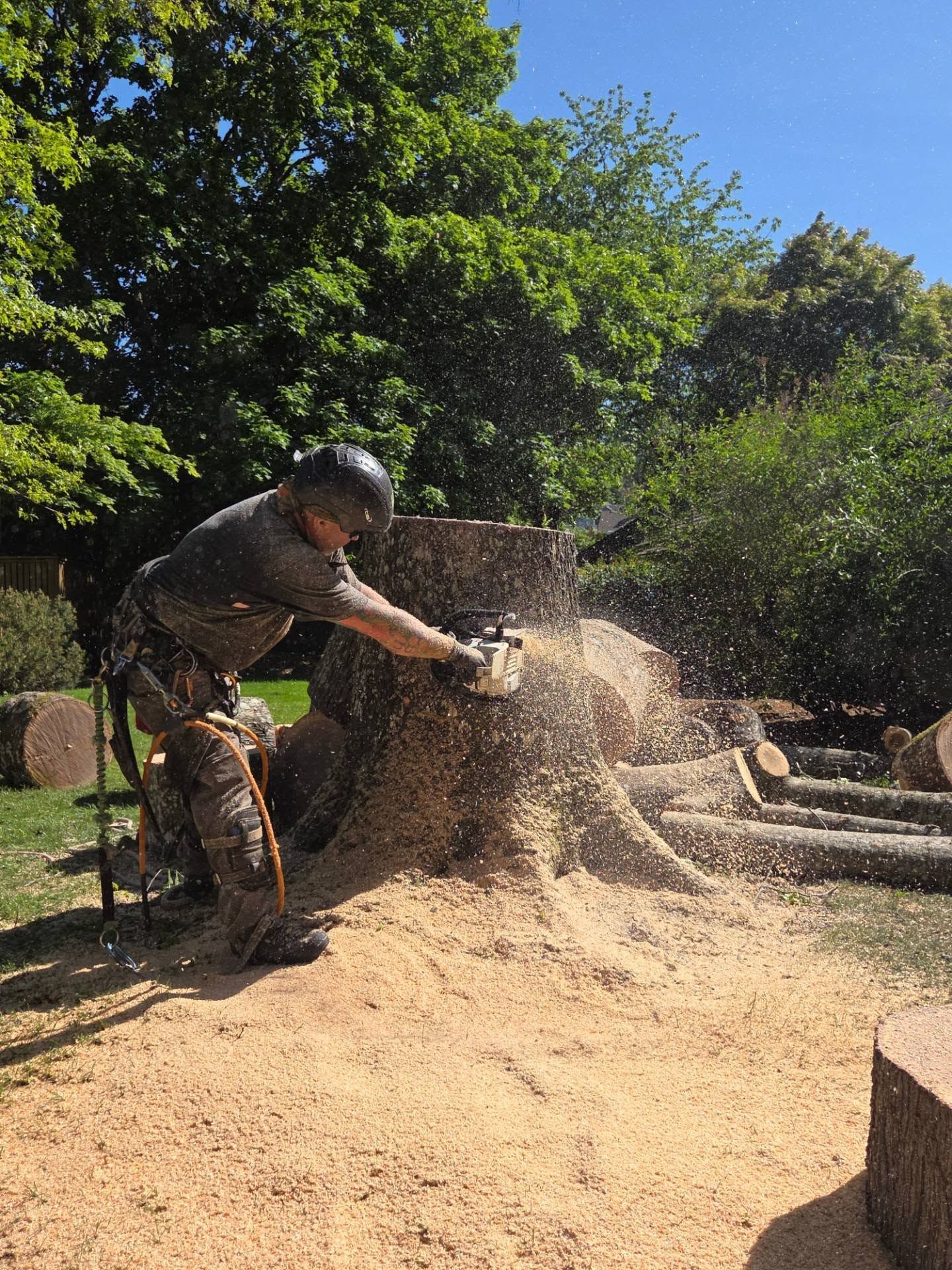
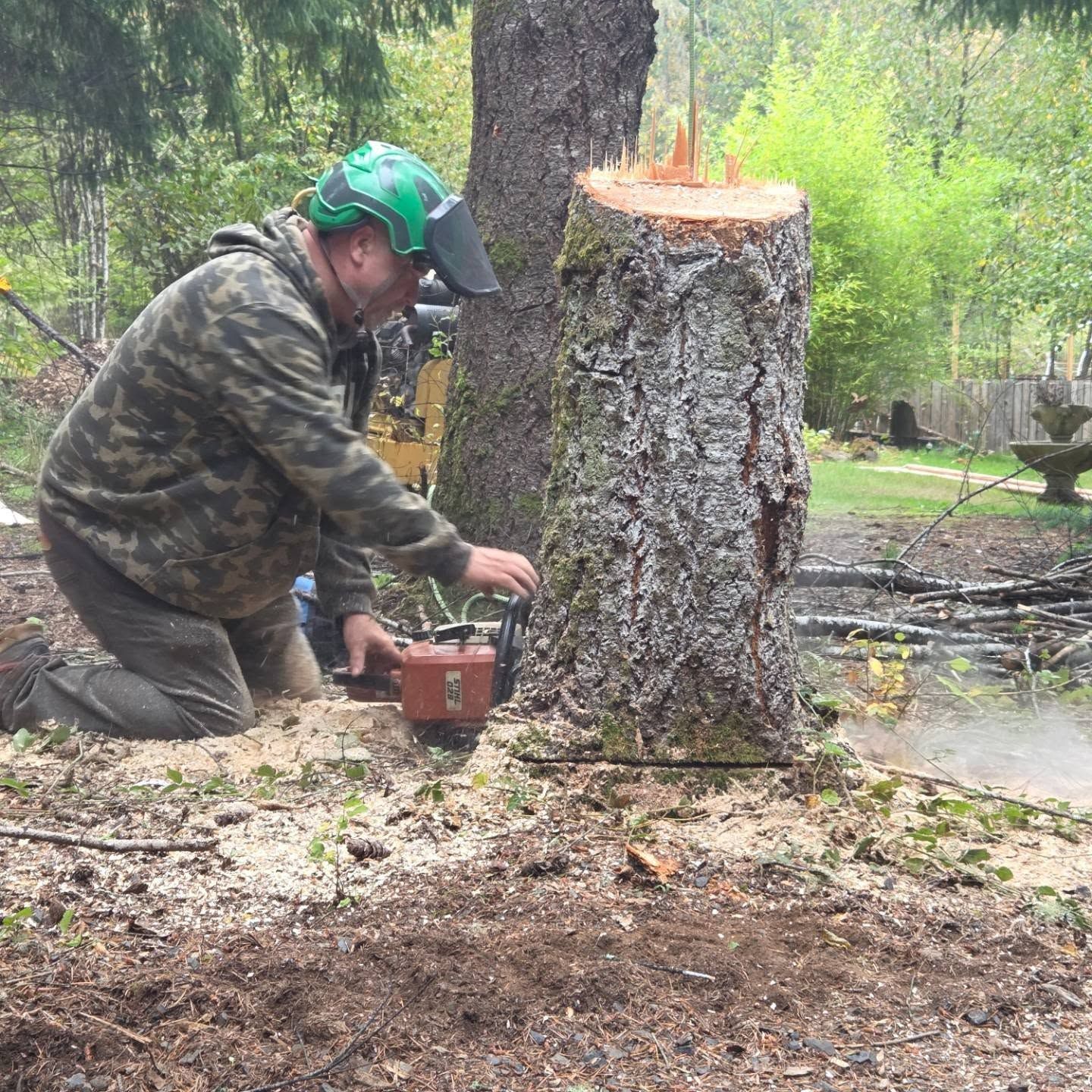
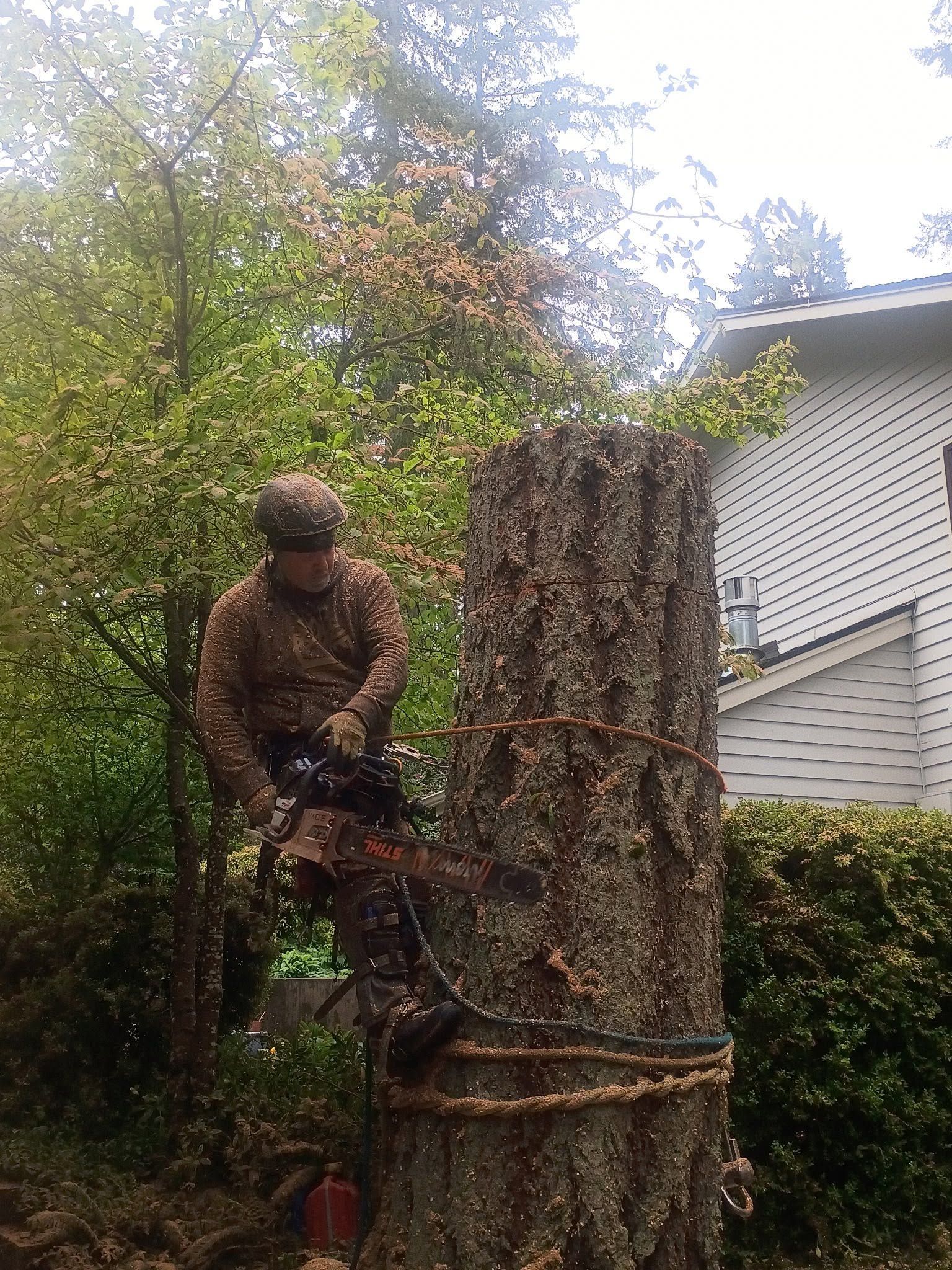
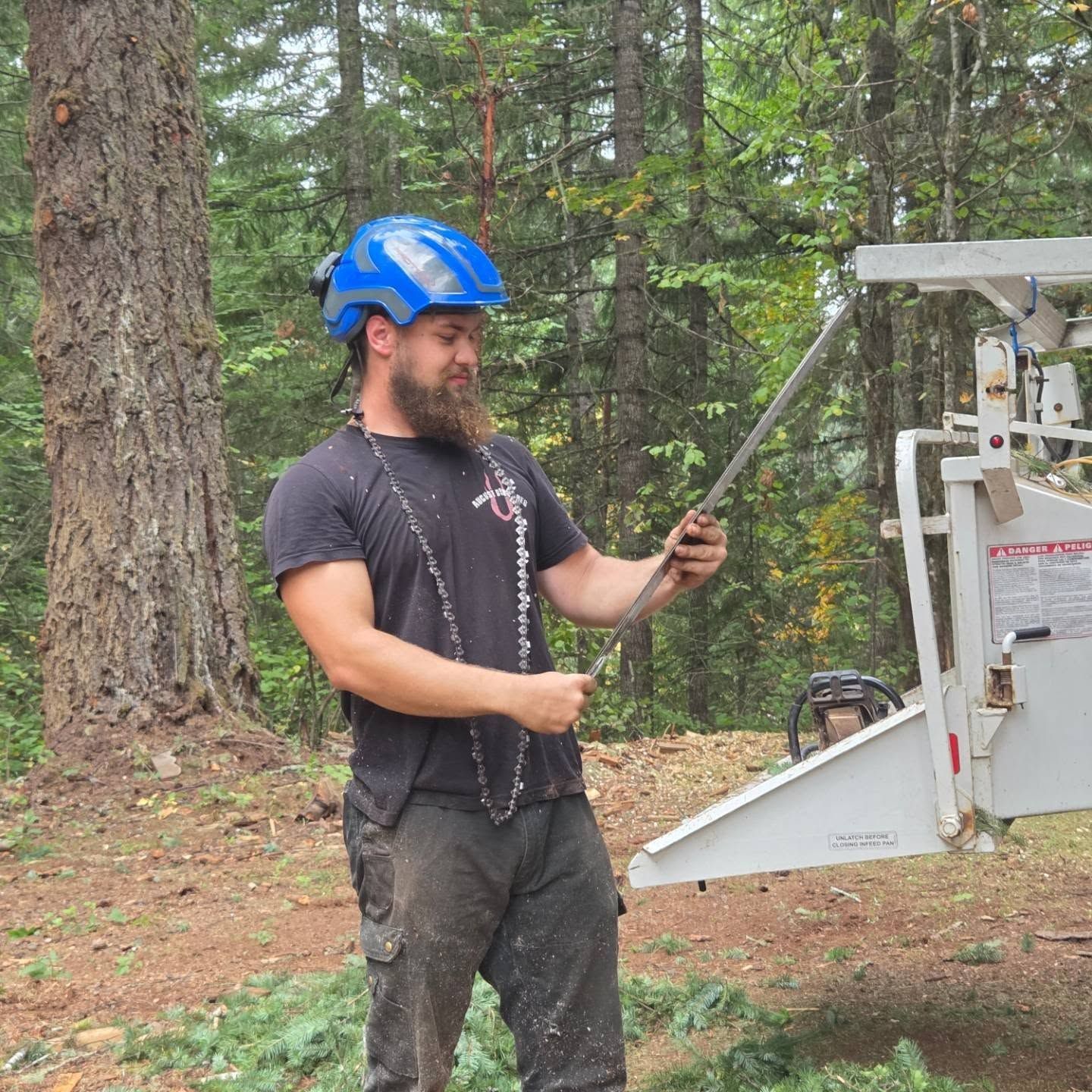
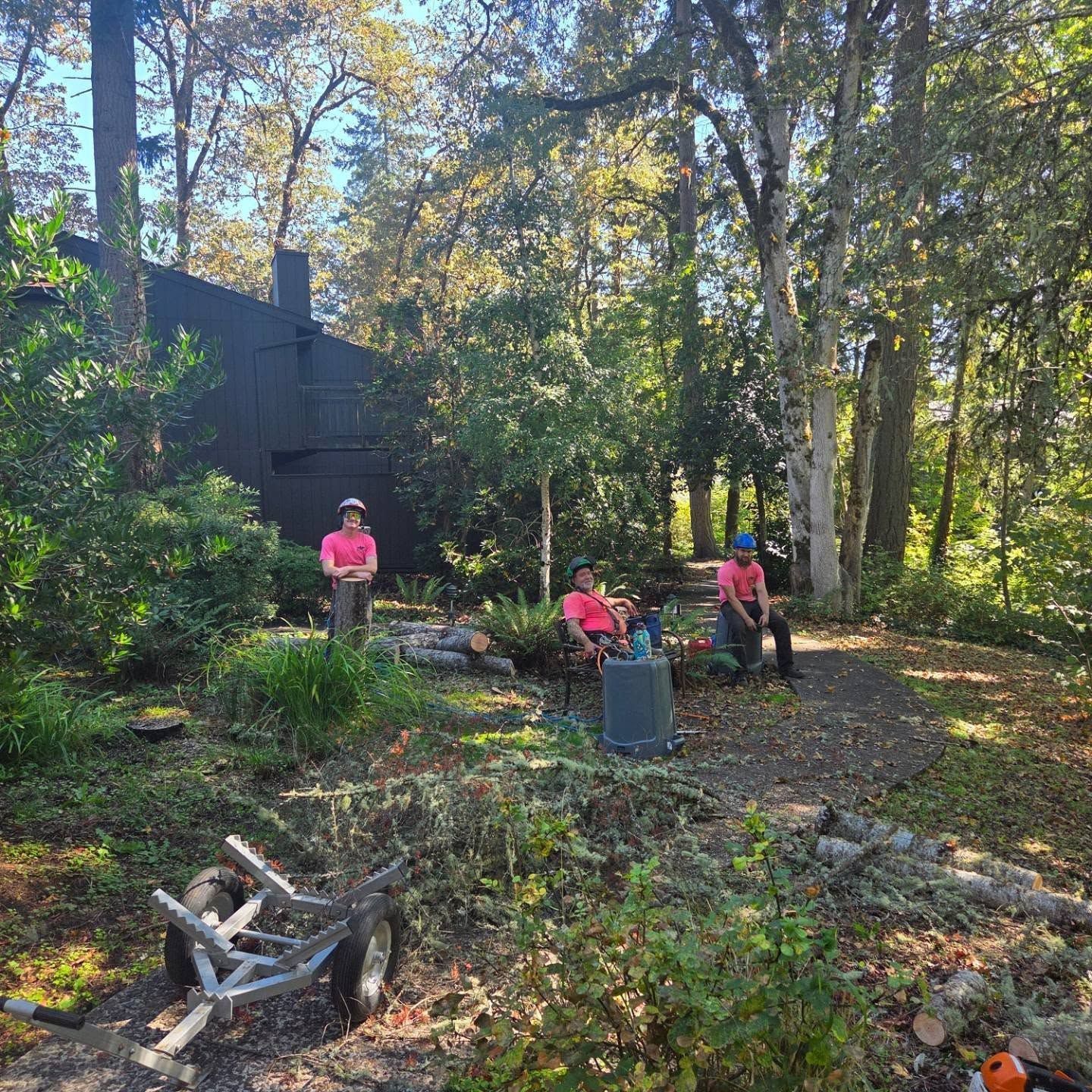
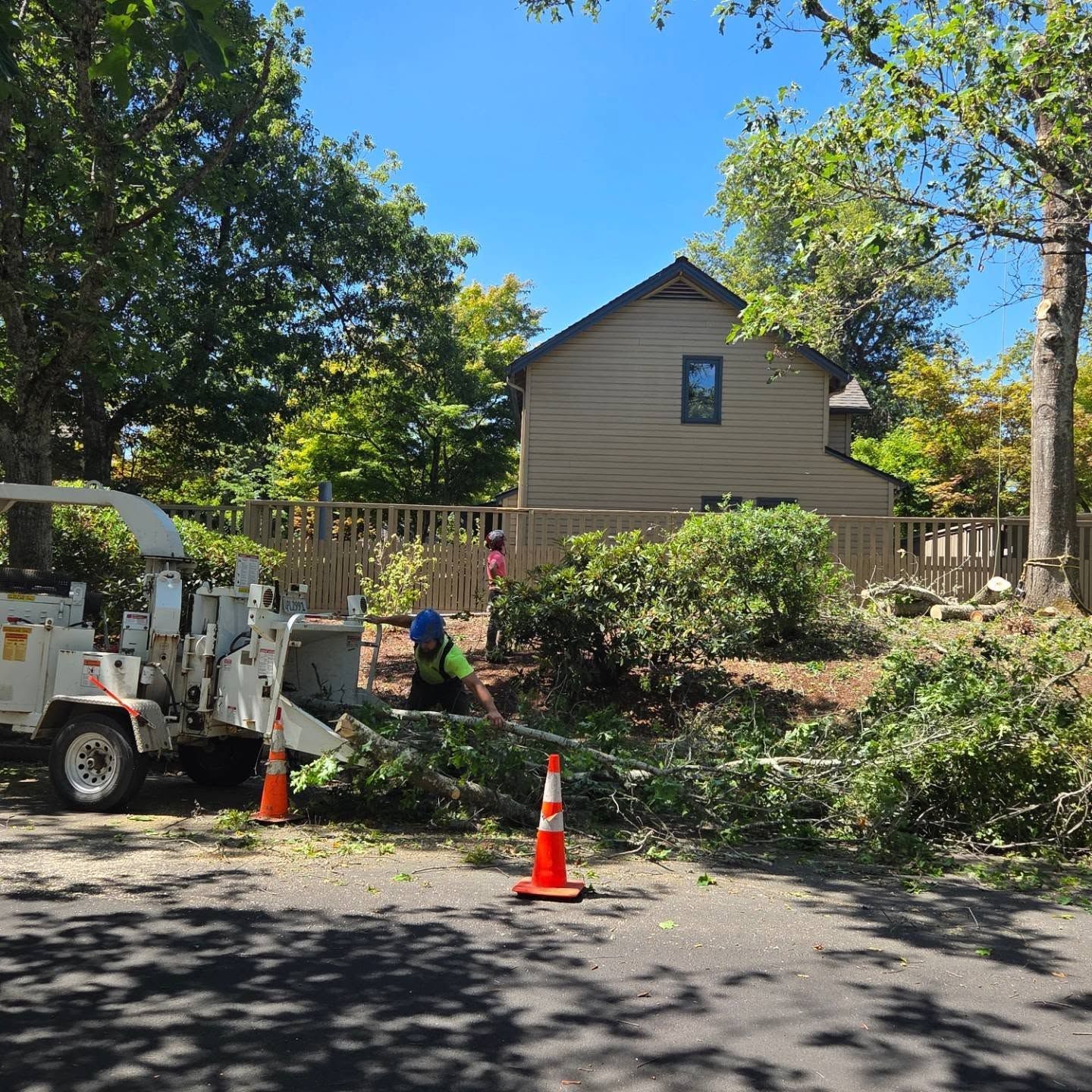


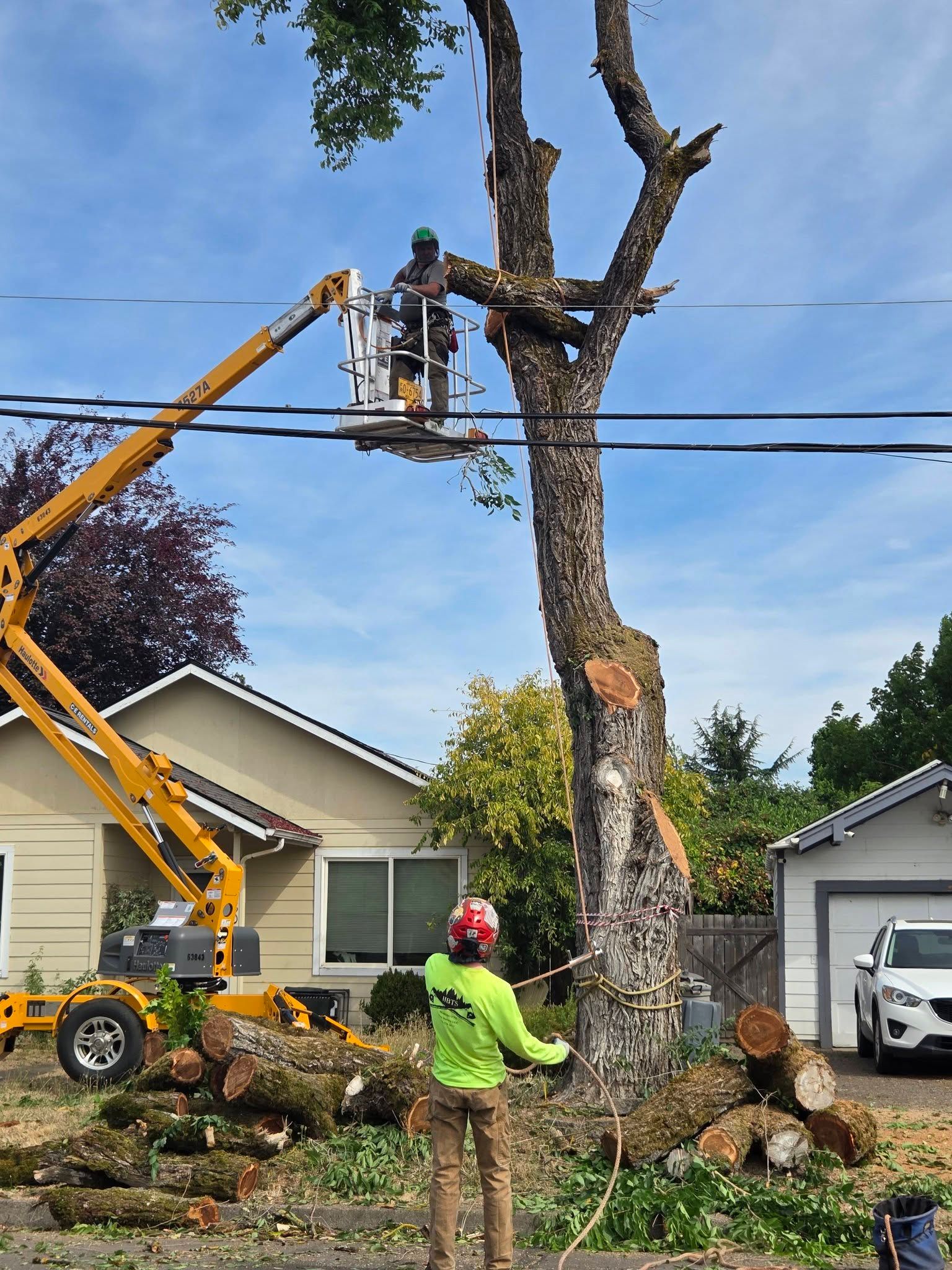
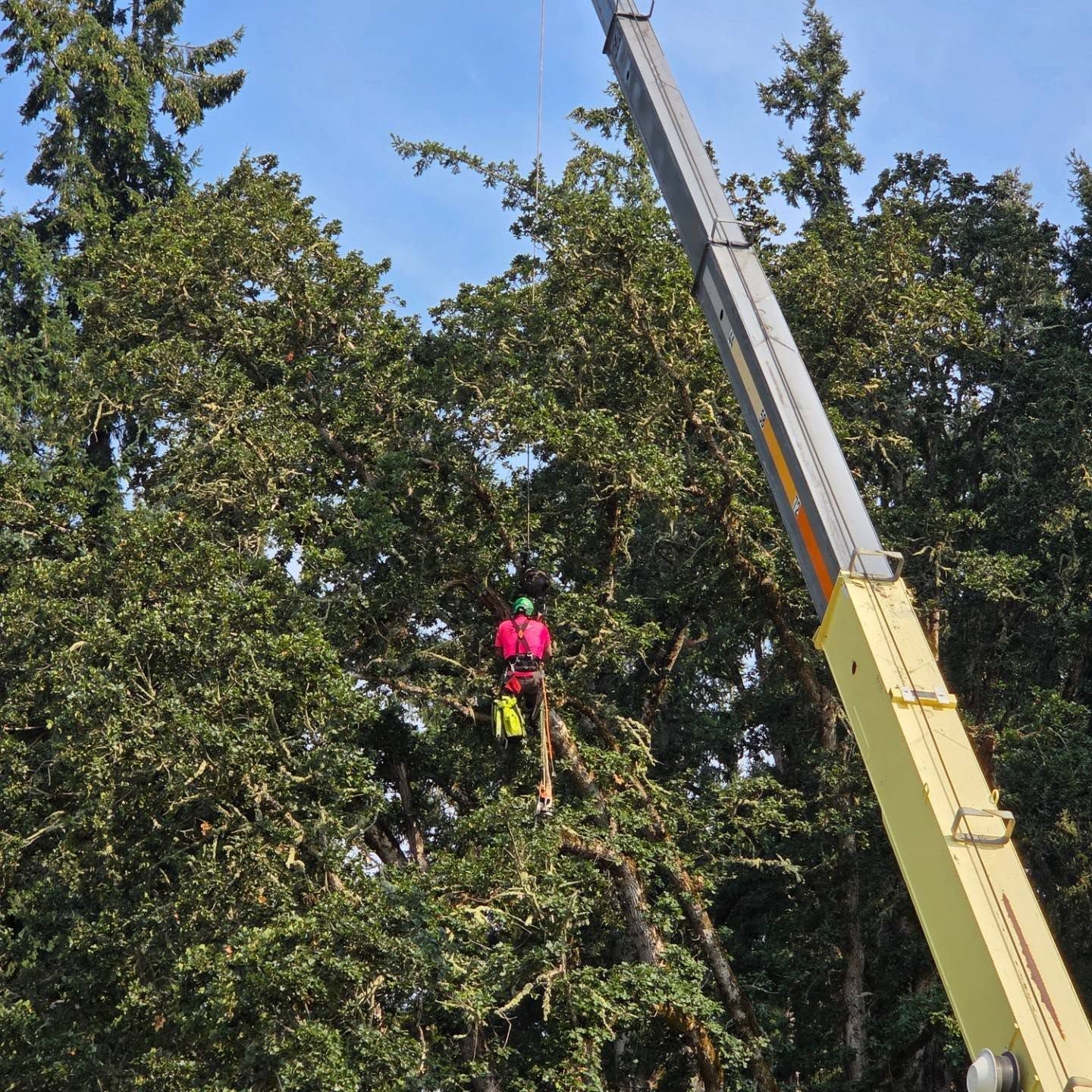
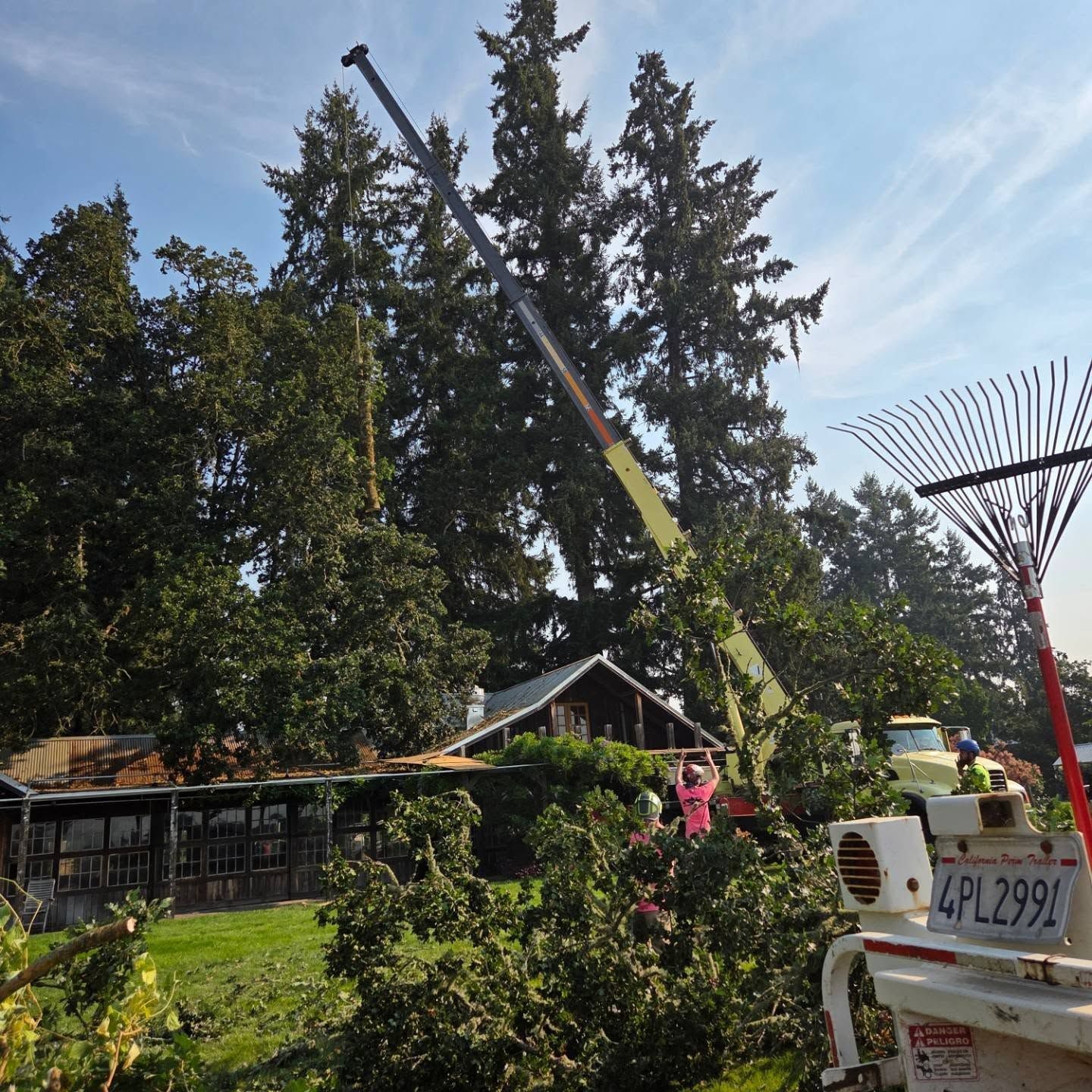
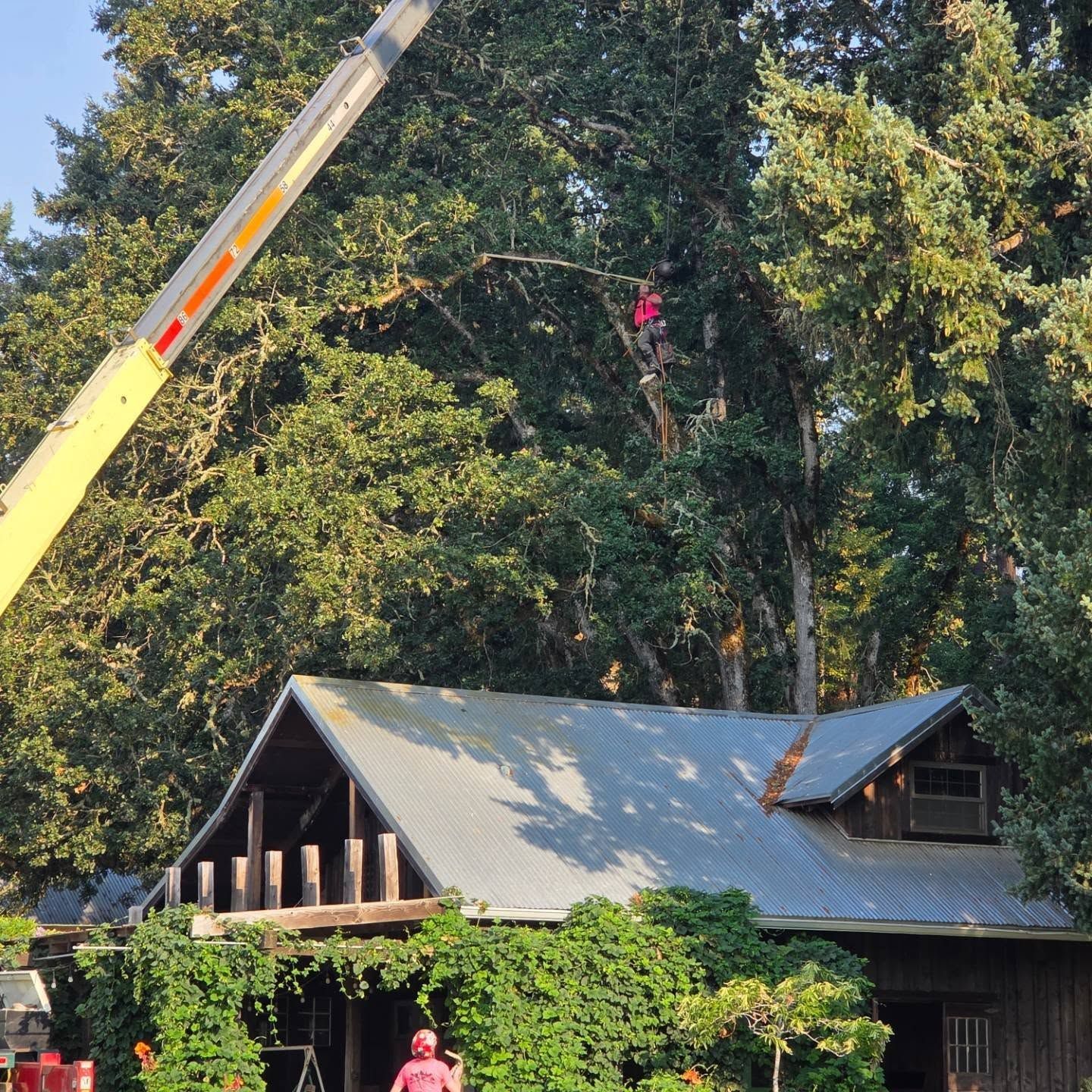


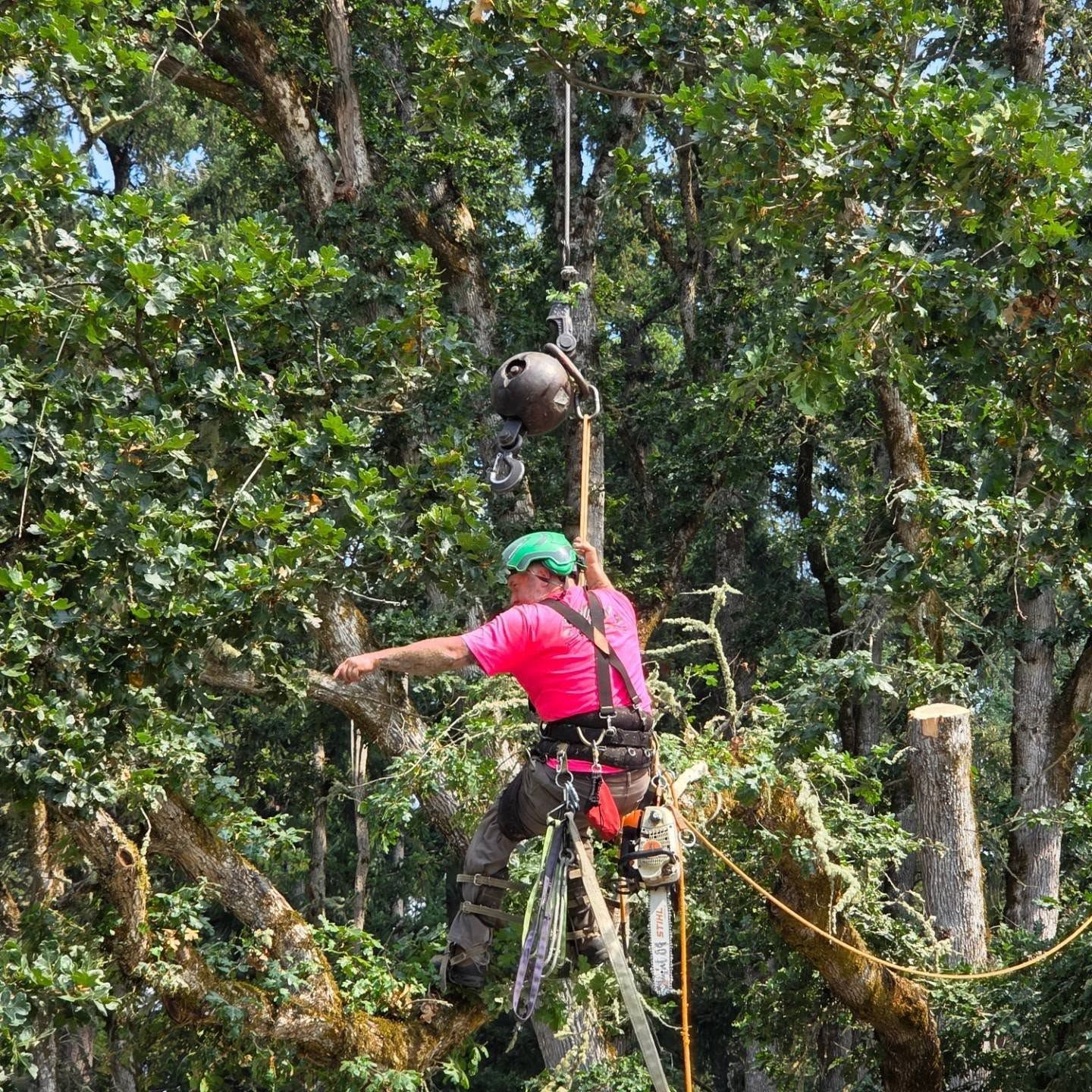
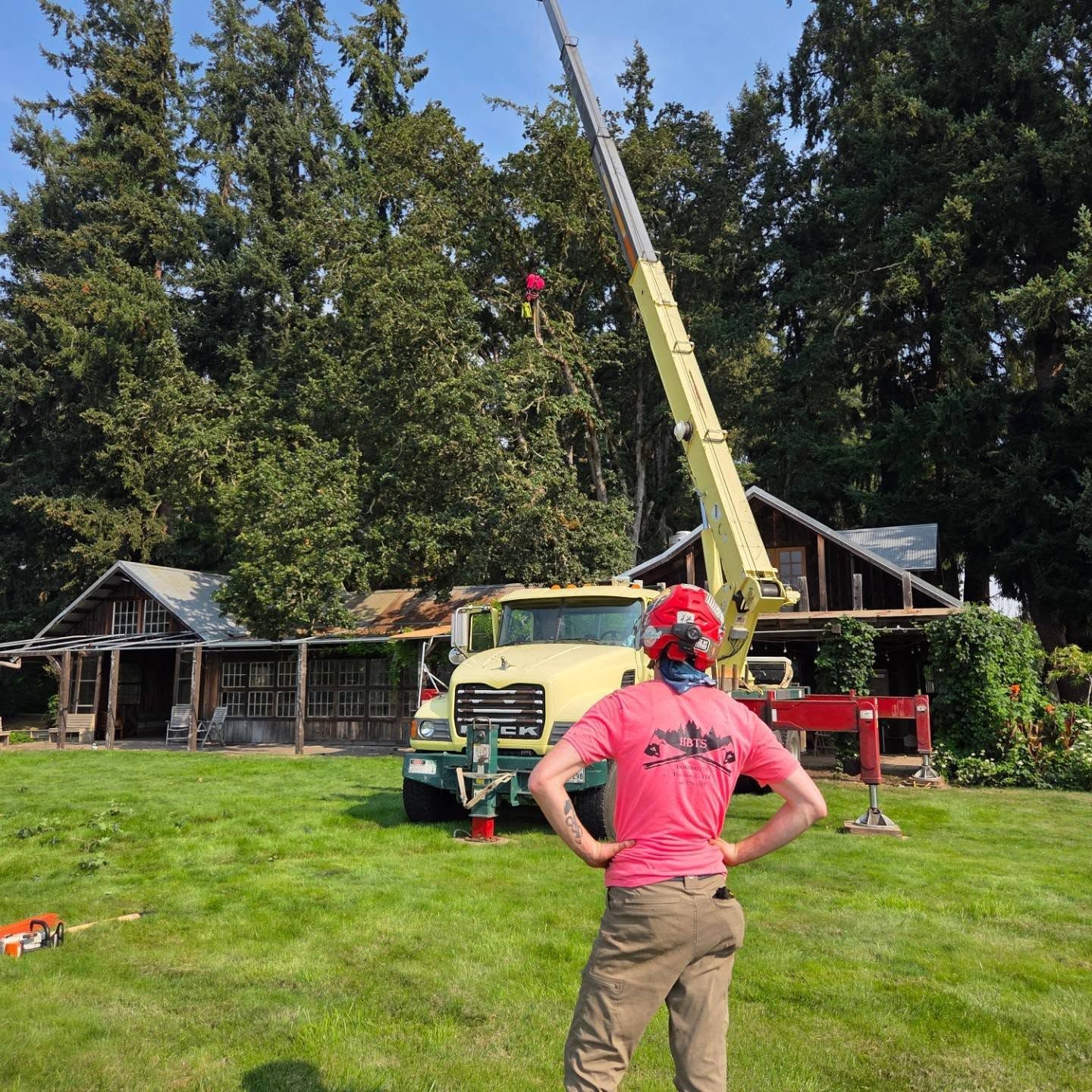
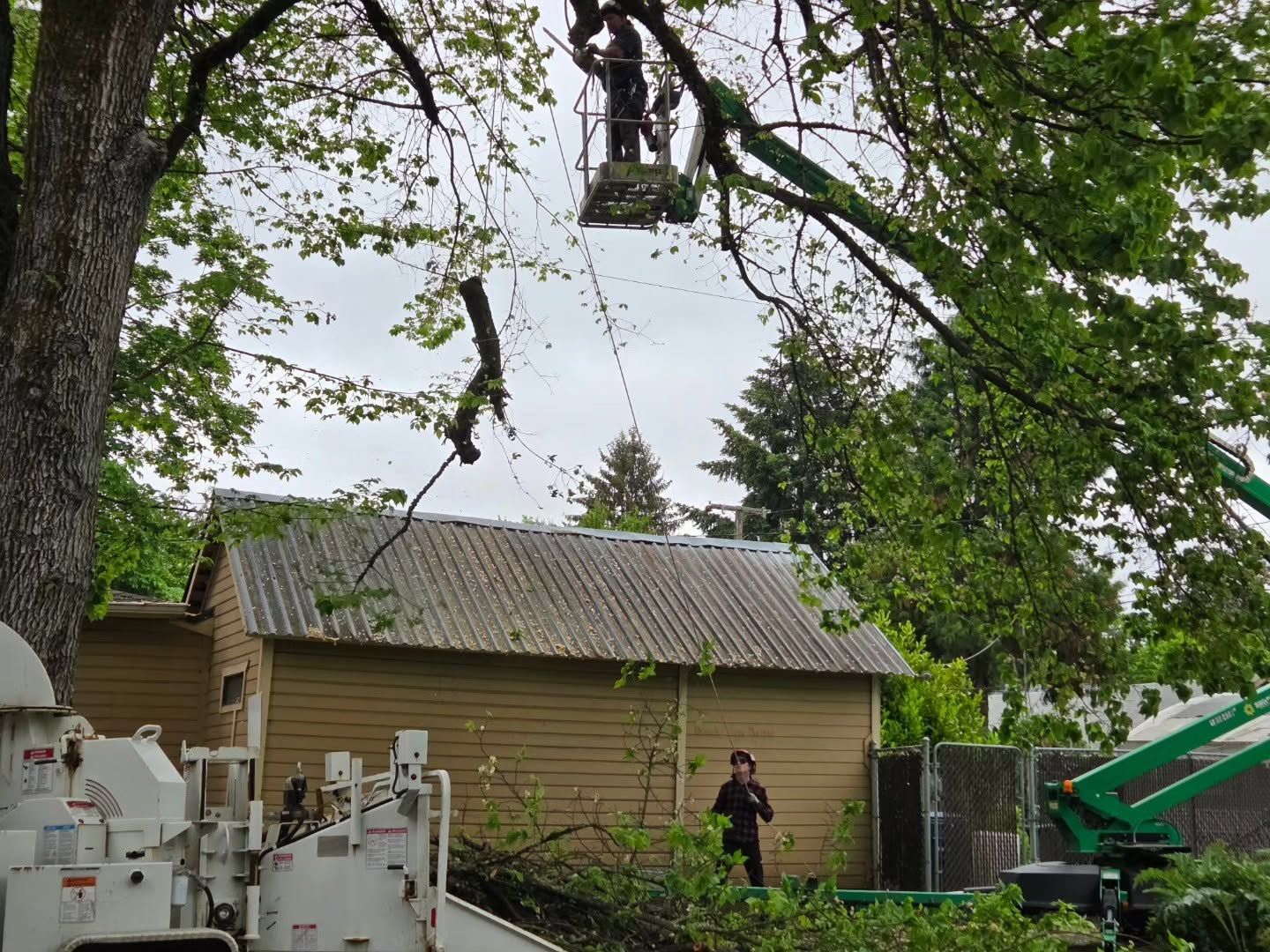
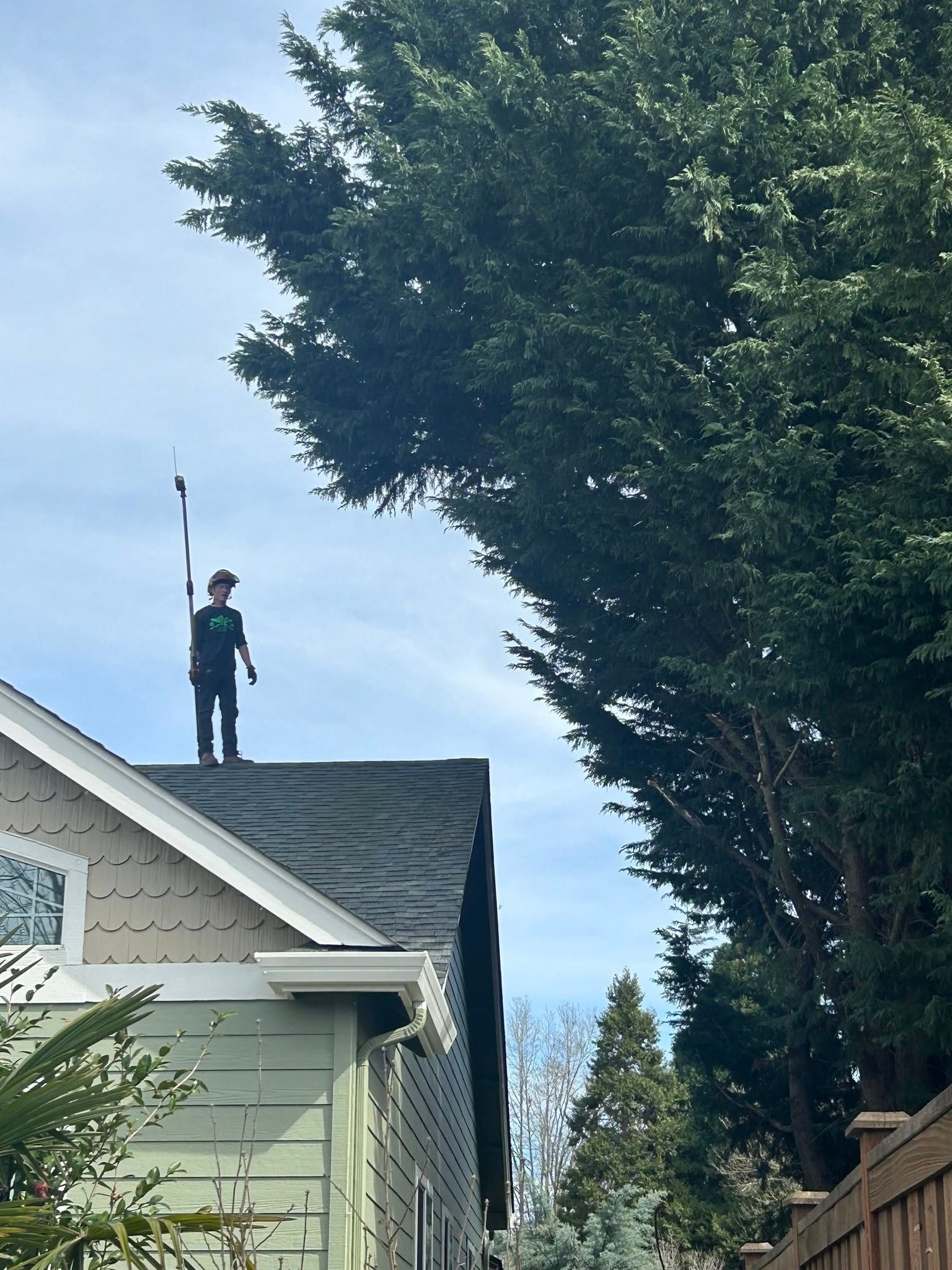

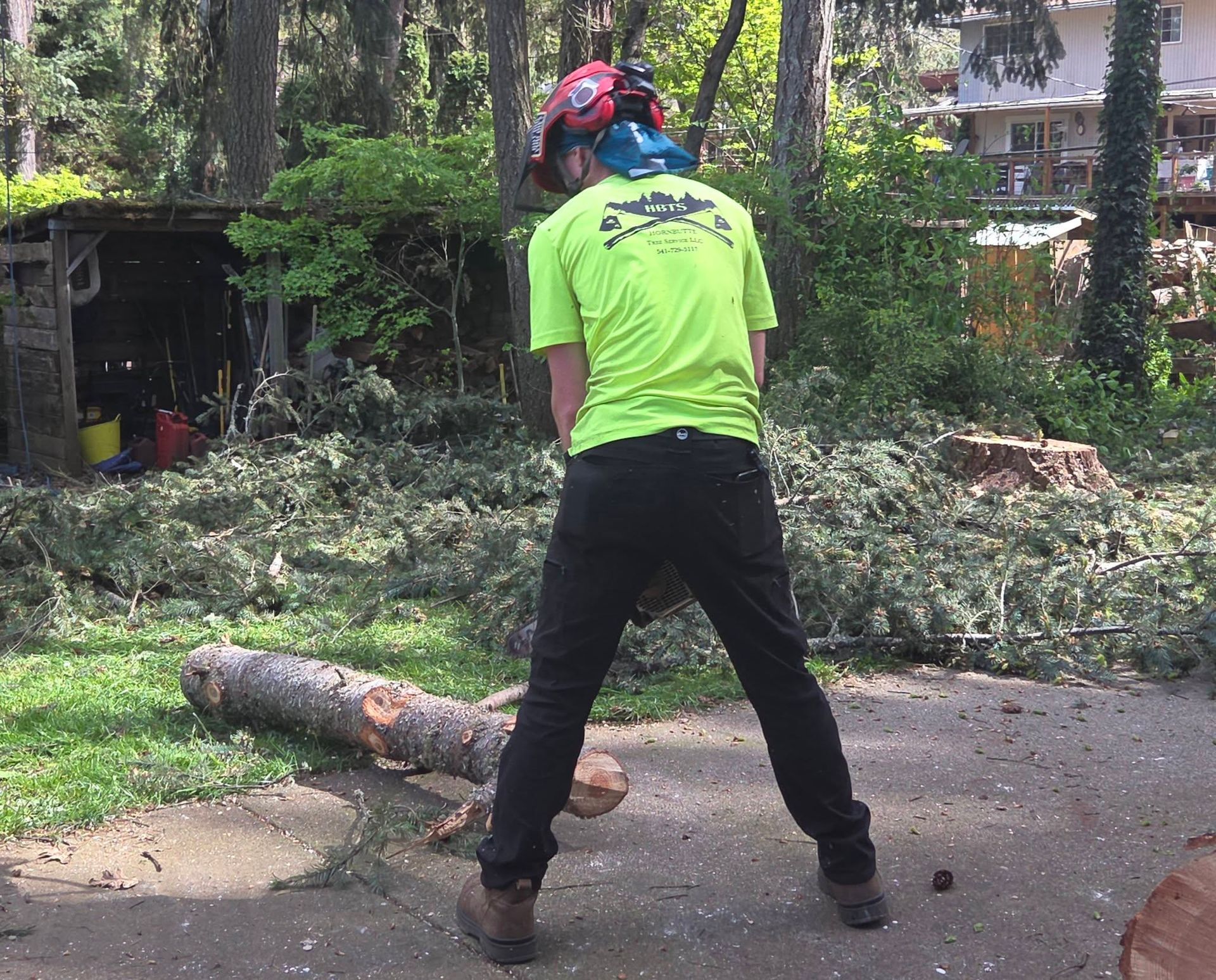
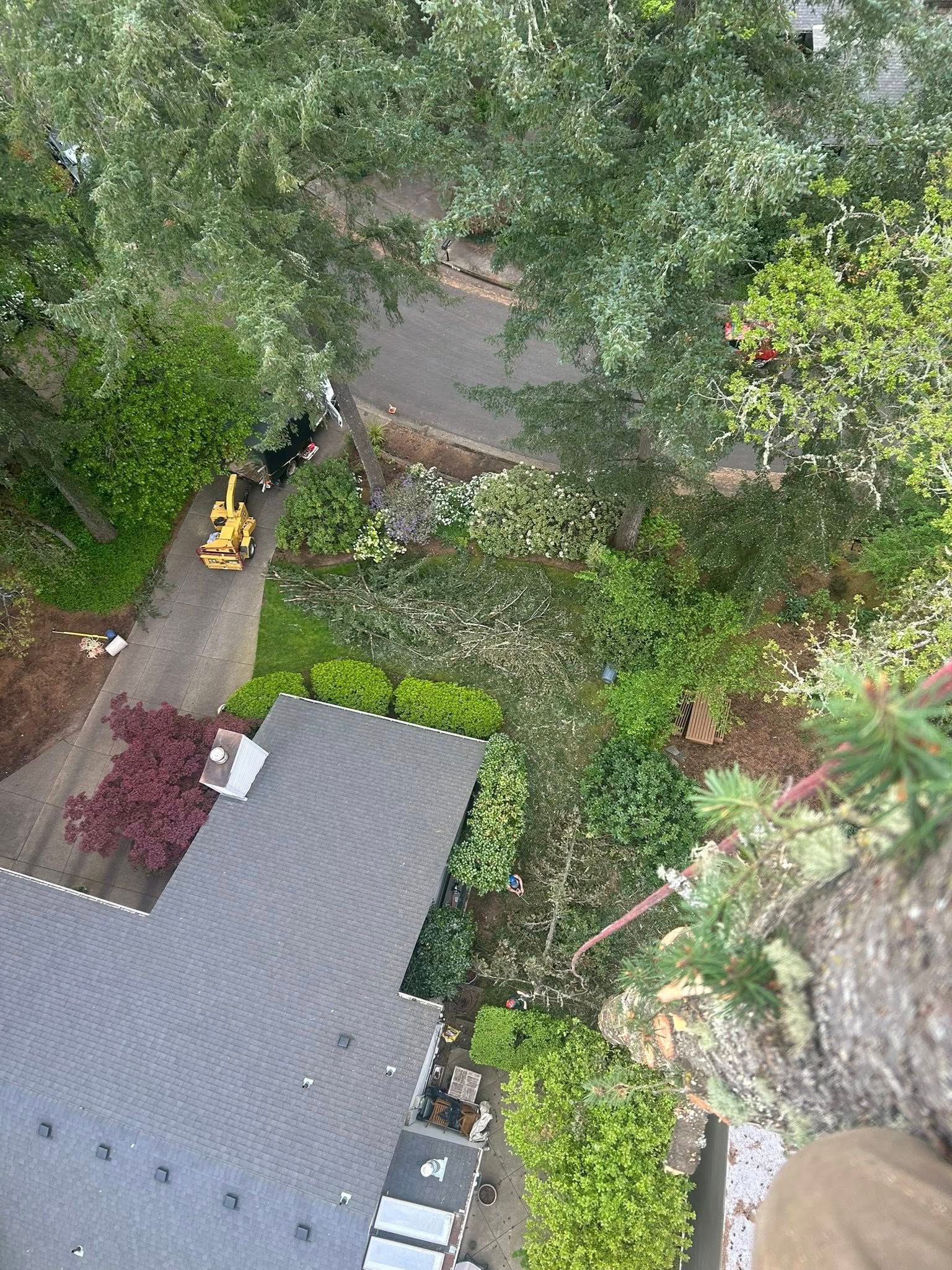
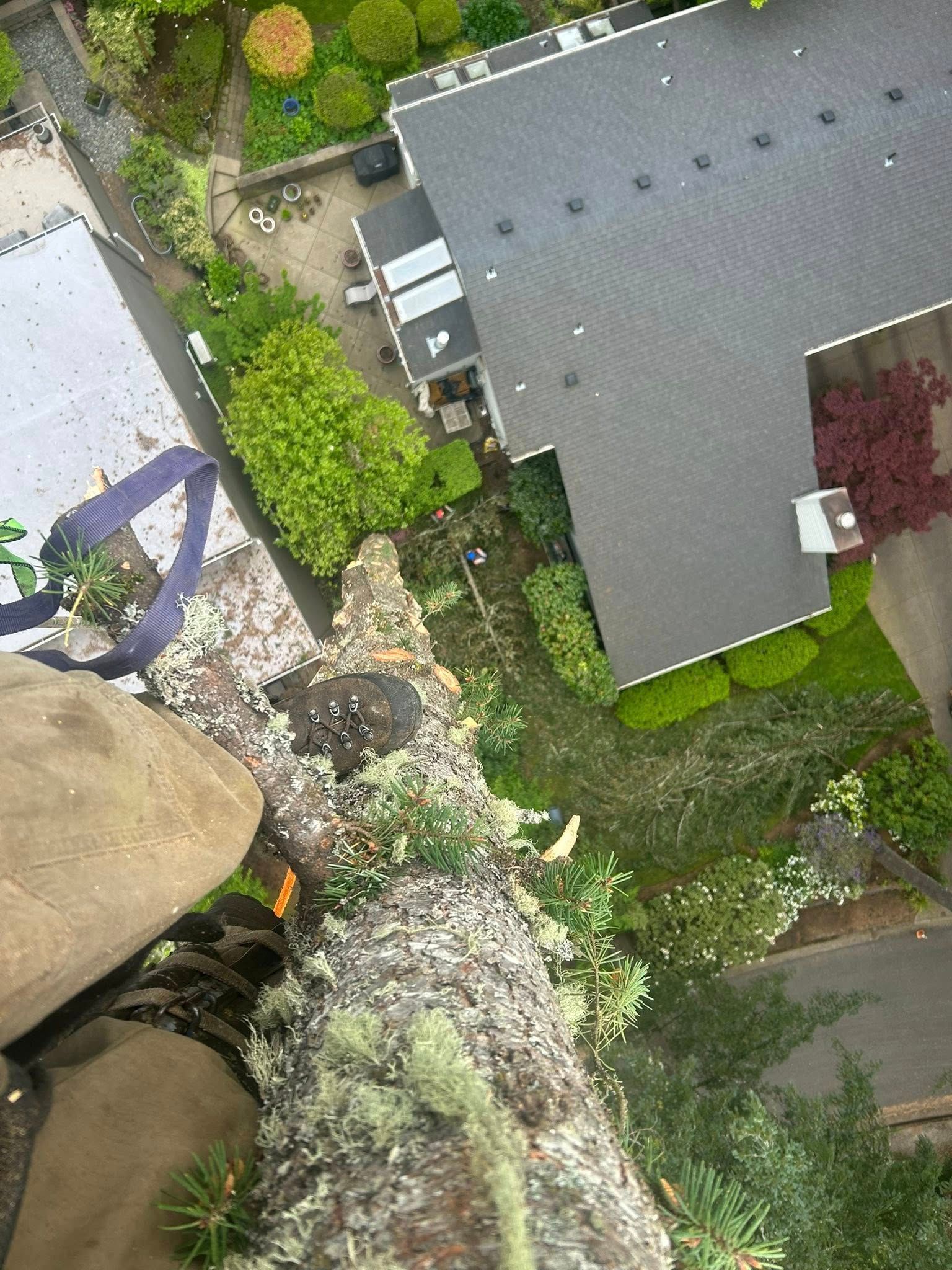
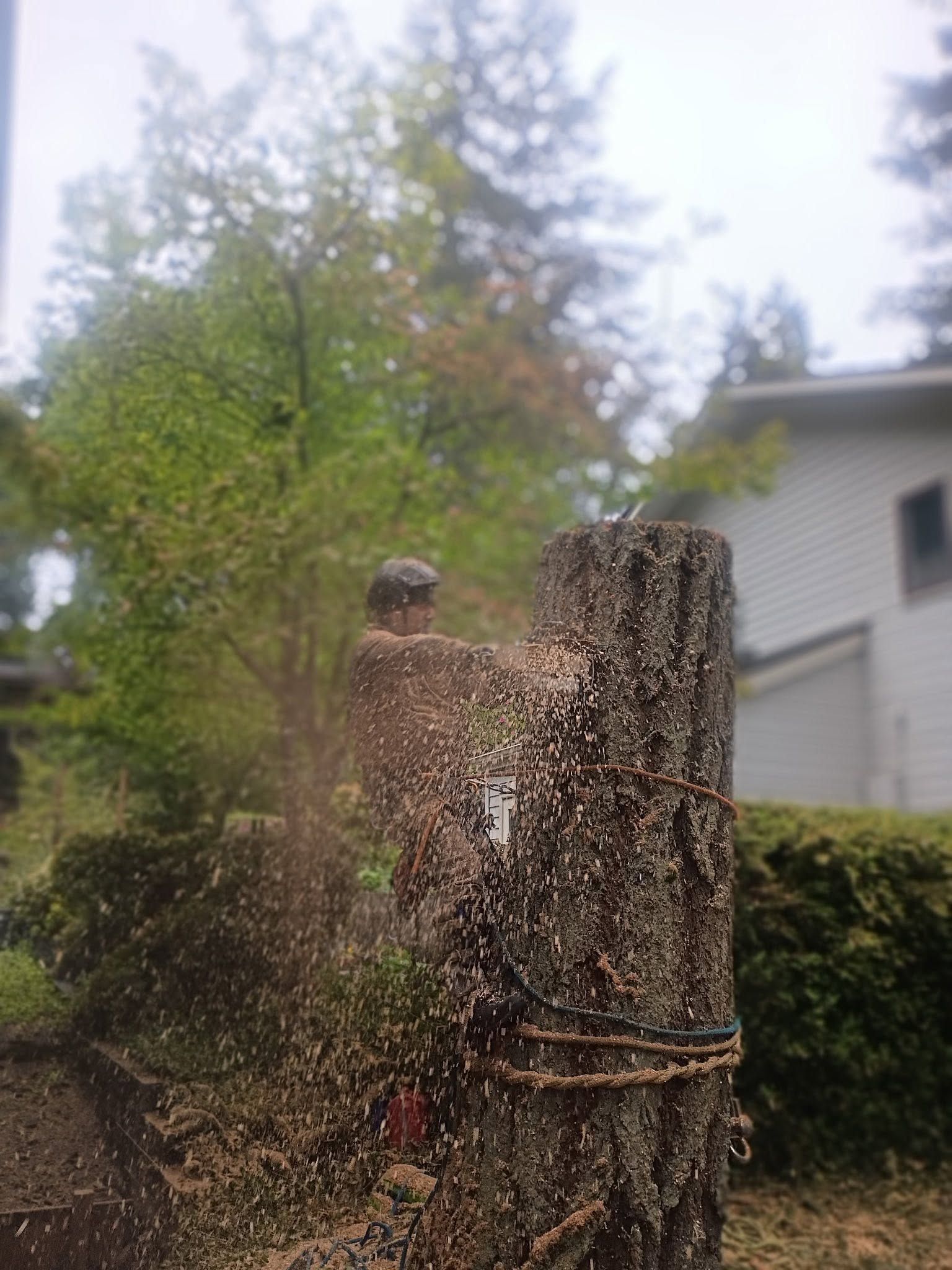
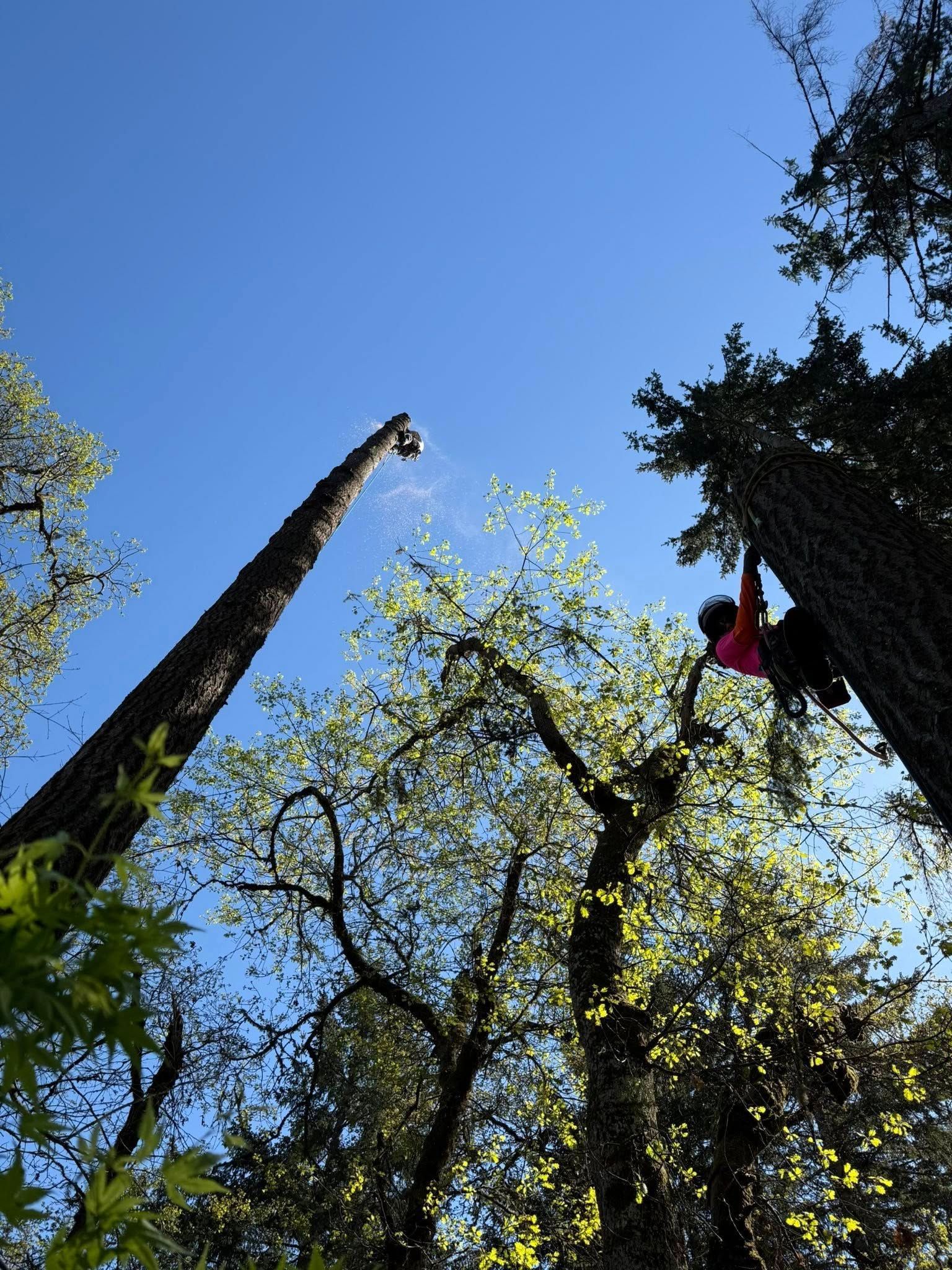

Photo gallery
What does our tree work look like up close?
Our tree work is mostly rope and harness climbing: crew members in the canopy pruning branches, roped in on tall firs taking them down in sections, and neat finished results on the ground. These seven photos come straight from our own jobs around Lane County, with no stock images and nothing staged for the camera.
Each photo shows a moment in a real day of work. Some capture a climber at the top of a fir before the final cuts, others show pruning high in a leafy canopy or the clean lines of a freshly trimmed row of arborvitae. Read the guide below the gallery to learn what each kind of job involves and what to look for when you compare tree services.
Looking for a specific kind of work? Browse our complete tree service list to match a photo with the service behind it.
Behind each photo
What is happening in each photo?
Each photo in the gallery captures a stage of a real job: climbers pruning in a canopy, a climber at the top of a fir before a takedown, trunks being cut down in sections and a freshly trimmed hedge. The short notes below explain what you are seeing and why the crew works that way.
Two climbers in a leafy canopy
Two crew members in climbing harnesses work among the branches of a broadleaf tree. Pruning like this happens inside the crown, where climbers can reach deadwood and crowded limbs that a ladder never could.
A wave from the top of a fir
A climber pauses at the top of a tall fir during a removal. Reaching the top safely is the first step of a sectional takedown, and it is where the plan for every later cut gets confirmed.
A trunk beside a residential street
With the limbs already removed, a climber works on a tall trunk next to a street in fall, with traffic cones set out below. Street-side jobs need a clear drop zone and close attention to passing cars and people.
A freshly trimmed row of arborvitae
A row of arborvitae along a backyard walkway after trimming. Even tops and straight sides keep a privacy screen dense, and regular shaping keeps a hedge from growing too tall to manage.
A section coming off a big trunk
A section comes off the top of a large trunk with sawdust in the air against a blue sky. Cutting from the top down in pieces is how a big tree comes out of a tight space without hitting what is below.
High on a fir among evergreens
A climber works high on a tall fir surrounded by other evergreens. Tall conifers are among the most familiar trees in the southern Willamette Valley, and they make up a big share of our removal work.
A climber against the sun
An arborist climbs a bare trunk, silhouetted against the sun. Climbing with ropes and a harness lets the crew reach the top of a tree without driving heavy machinery across your lawn.
Why only our own photos?
Every image here comes from a HornButte Tree Service job. We do not use stock photos or computer-generated images, because a gallery should show you how a company actually works, not how a marketing team imagines it. We add new photos from our jobs over time, so check back if you want to see more of the crew in action.
Reading the photos
How do I read tree work photos?
When you look at tree work photos, check three things: how the climber is secured, what sits underneath the work and how the finished tree or yard looks. Good photos show ropes and harnesses in use, controlled cuts made in sections and a tidy site, not just a dramatic moment.
Tree work photos can be hard to interpret if you have never watched a climber at work. A trunk with no branches may look alarming, but in a sectional takedown that is exactly the plan: the crew removes the limbs first, then brings the trunk down in manageable pieces. Here is what to look for in our gallery and in any other company's photos.
- Ropes and tie-in points. A climber should be connected to the tree with a climbing line while cutting.
- Protective gear. Helmets, eye protection and harnesses are signs of a crew that takes safety seriously.
- Controlled cut sizes. Smaller sections lowered or dropped into a clear area mean less risk to what is below.
- Traffic and site control. Cones and a clear drop zone, like the street job in our photos, show planning for people and cars nearby.
- Clean finished work. Neat pruning cuts and an even hedge line are the payoff of careful technique.
- Real locations. Photos from local yards and streets tell you more than polished stock images ever could.
If a photo raises a question about your own trees, our tree health assessment service is a low-pressure way to get answers on site from someone who has seen a lot of Lane County trees.
Types of tree jobs
What does each type of tree job involve?
The photos show three main kinds of work: sectional takedowns with ropes, pruning high in a canopy and hedge shaping. Each uses different techniques and planning, and the right one depends on the tree, its surroundings and what you want the space to look like afterward.
Sectional takedowns with ropes
When a tree is too tall or too close to a house, street or fence to fell in one piece, a climber goes up and removes it from the top down. Several of our photos show this kind of job: a climber high on a fir trunk, a topped trunk beside a residential street with cones set out, and a section being cut from the top of a large trunk with sawdust in the air. Limbs come off first, then the trunk is cut in pieces small enough to control. This is the core of most tree removal work in tight neighborhoods, and it is how we handle dead tree removal when a dry fir stands near a home.
Canopy pruning
Pruning means working inside the crown of a living tree, which is what the photo of two harnessed climbers in a leafy canopy shows. Climbers move from limb to limb, removing deadwood, thinning crowded branches or raising low limbs for clearance. The goal is a healthier, safer tree that still looks natural. Learn more about tree crown thinning and clearance pruning if your trees feel heavy or crowded.
Hedge shaping
The row of arborvitae along a backyard walkway shows a different kind of finish: even, consistent shaping that keeps a screen tidy and dense. Hedge work is detail work, usually done from the ground or a ladder rather than a climbing line, and it pairs well with brush clearing along fence lines and property edges.
About crane work. We can arrange crane-assisted removals when a job calls for it, but every photo here shows rope and harness climbing. If your tree may need a crane, Jaymie will tell you honestly during the quote visit.
Questions to ask
What should I ask a tree service after looking at photos?
Photos are a starting point, not a guarantee. After looking through a gallery, ask the company how they would handle your specific trees, how they protect property, whether they are licensed, bonded and insured, and what happens to the wood. The answers tell you more than any single picture.
- How would you take this tree down or prune it? Listen for a plan based on the tree, not a one-size answer.
- What will you do to protect my house and garden? Rigging, drop zones and ground protection should come up.
- Are you licensed, bonded and insured? HornButte Tree Service LLC is, and any company you hire should be.
- Can the tree be saved? A careful arborist considers pruning or care before removal.
- Where will the material go? We mulch tree material whenever possible so it can go back into the earth.
Customers often say the answers to these questions are what convinced them. You can read their own words in our customer reviews and find more detail in our tree service questions and answers before you book. When you are ready, request a free quote and attach a few photos of your own trees.
Is there a best season for tree work in Lane County?
Tree work happens year round in the southern Willamette Valley, but each season has its strengths. Many deciduous trees are easiest to assess and prune when their leaves are down, while dry summer ground makes it easier to reach trees on soft or sloped properties. Winter storms bring emergency work no matter what the calendar says. If your project is flexible, booking pruning ahead of the storm season is one of the simplest ways to reduce the chance of broken limbs later, and Jaymie can suggest timing that suits both the tree and your plans for the yard.
Have trees that need attention?
Tell us about the trees on your property and Jaymie will follow up to plan a free quote visit. From tall firs to overgrown hedges, our licensed, bonded and insured crew handles it with care.