Tree Services in Eugene and Springfield
Tree Removal, Trimming, Pruning and Land Clearing
Woman-owned tree service in Lane County
Request Free Estimate
Get Your Quote
Contact Us
We will get back to you as soon as possible.
Please try again later.
Licensed, Bonded and Insured
Oregon CCB licensed
30+ Years
of tree experience
Free Quotes
Senior and military discounts
5.0 Stars on Google
From 14 reviews
About HornButte
Local, Woman-Owned Tree Care Since 2016
At HornButte Tree Service LLC, we’re a woman-owned business helping our neighbors care for their trees and outdoor spaces. We serve Lowell, Eugene, Springfield, and surrounding Lane County communities with tree removal, tree trimming, tree pruning, tree health assessments, and land clearing. Whether you’re concerned about a damaged tree or need overgrown brush cleared, we’ll discuss your needs and provide a free quote. Our licensed, bonded, and insured team also offers emergency tree removal when unexpected damage affects your property. We take pride in serving our local community and helping you make informed decisions about your trees and your property.
Eugene, OR
What Tree Services Do We Offer in Eugene, Oregon?
Our work falls into four families of service. Each one covers the specific jobs Lane County property owners call about most, from a single dead fir leaning toward the house to an acre of brush that has swallowed a back fence. Choose a card to learn how we handle it, or browse every tree service we offer in one place.
Removal
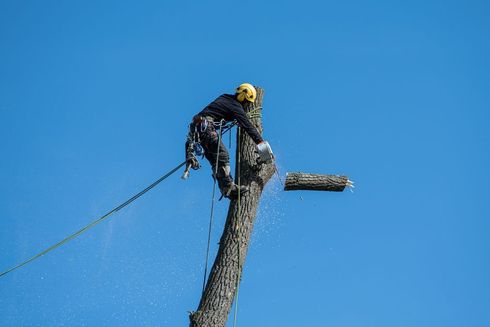
Safe, controlled removal of dead, dying and hazardous trees, lowered in sections with ropes and harnesses so your home and landscape stay protected. We also handle emergency tree removal and hazardous tree removal plus dead tree removal and storm damage tree cleanup after winter wind and ice.
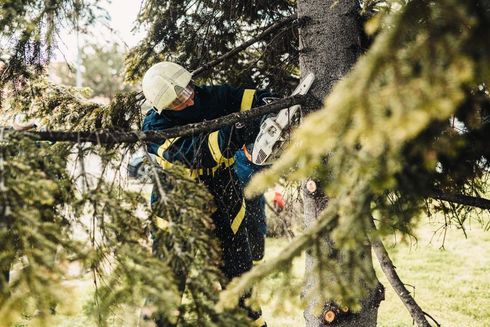
Removal
Thoughtful pruning that keeps a tree's natural shape while improving its structure, light and clearance. Choose from deadwood removal and tree crown thinning or ask about tree crown reduction and tree clearance pruning for roofs, driveways and walkways.
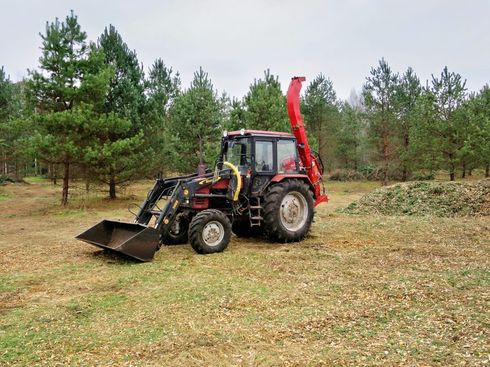
Removal
Clearing brush, saplings and unwanted trees so you can build, garden, graze or simply enjoy your land again. Our crew offers brush clearing and lot clearing along with overgrown property clearing for rural acreage and neglected yards.
Our tree services
What sets us apart
Tree Care You Can Trust From the First Visit to the Final Rake
Plenty of crews can run a chainsaw. What our clients tell us they value is the whole experience: a knowledgeable estimator, a crew that shows up ready to work, honest options and a yard left as clean as we found it. Here is what you can expect when you hire HornButte.
Woman Owned and Community Focused
We’re a woman-owned tree service serving Lowell, Eugene, Springfield, and surrounding communities. We take pride in helping our neighbors care for their trees and properties.
Tree Care Beyond Removal
We provide tree trimming, pruning, and tree health assessments to help customers make informed decisions about their trees. Our approach considers each tree’s condition, structure, and the needs of the property.
Tree Removal and Land Clearing
We handle tree removal, emergency tree removal, and land clearing for properties that need safer, more usable outdoor space. From removing a problem tree to clearing overgrown brush, we tailor the work to your project.
Licensed, Bonded and Insured
We’re licensed, bonded, and insured, giving customers confidence when choosing us for their tree services. We also offer free quotes so you can understand the proposed work and pricing before getting started.
How it works
How Does a Free Tree Service Quote Work?
Getting a quote from HornButte is simple and costs nothing. You reach out with a few details, Jaymie visits your property, and you receive clear options before any work is scheduled. Many clients tell us the visit itself is the most helpful part, because they finally understand what their trees need and why.
- Reach out with the basics. Tell us which trees concern you, what you have noticed and roughly where they stand. Photos help, and our free estimate request form makes it easy to share them with us.
- Walk the property with Jaymie. Our owner and estimator looks at each tree, its lean, its health and what sits beneath it, then talks through what she sees in plain language.
- Compare your options. Where a tree can be saved, we explain pruning or care choices alongside removal so you can decide what fits your goals and your budget.
- Schedule the work and relax. Our crew arrives ready to work, protects your landscape, completes the job safely and leaves the site clean, with tree material mulched whenever possible.
Emergency tree removal is available around the clock when storms bring trees down.
What our clients say
5.0 Stars on Google From 14 Reviews
Our reputation grows one yard at a time. Here is what a few Lane County clients wrote after their projects, shared word for word. Read more in our client reviews collected from Google, Yelp and Facebook.
Tree removal guide
How Do I Know If a Tree Needs to Come Down?
A tree usually needs to come down when it is dead, failing structurally or leaning toward something it could hit, and pruning can no longer make it safe. Warning signs include a dying crown, deep trunk cracks, fungus at the base, lifting roots and a worsening lean. When in doubt, have it assessed first.
Trees in the southern Willamette Valley live through wet winters, dry summers and the occasional ice storm, and each season tests them differently. Saturated soil can loosen root plates in winter, while summer drought stresses trees that are already in decline. Douglas fir, bigleaf maple and Oregon white oak all grow well here, but none of them is immune to age, disease or a poor pruning cut made years ago.
Warning signs worth a closer look
- Dead branches or bare sections in the upper crown during the growing season
- Cracks, splits or cavities in the trunk or where large limbs attach
- Mushrooms, conks or soft, crumbling wood near the base
- Soil heaving or roots lifting on one side of the tree
- A lean that is new or getting worse after storms
- Bark falling away in sheets from a trunk that should be solid
When pruning is enough and when it is not
Many trees that look scary can be kept. Removing deadwood, thinning a heavy crown or reducing long limbs can lower the risk while keeping shade, privacy and habitat. That is why we look for ways to save a tree first and talk through each option with you. Our tree risk assessments help sort out which trees can stay and which are better removed on your schedule rather than in a storm.
When a tree truly is past saving, our climbers take it down in controlled sections with ropes and harnesses, lowering each piece so your roof, fence and garden beds stay protected. Large or leaning trees close to homes are where experience matters most, and our crew brings more than 30 years of it. Learn more about hazardous tree removal and how we plan each cut.
Do not wait on a dead tree. Dead wood becomes more brittle each year, which makes removal harder and riskier for everyone involved. If a tree near your home has died, it is usually safer and simpler to remove it sooner. Read about dead tree removal to see what the process involves.
Pruning and timing guide
What Does Tree Trimming Do for a Tree's Health?
Good trimming removes dead, diseased and crossing branches, opens the crown to light and air and guides the tree toward a stronger structure. Done correctly, it lowers the chance of limbs failing in wind or ice and keeps the tree growing in balance. Done poorly, with topping or flush cuts, it can invite decay and weak regrowth.
We work with four classic types of pruning, and most jobs use a mix of them depending on the tree, its age and your goals for the yard.
- Cleaning: removing dead, dying and diseased branches from the crown.
- Thinning: taking out selected branches to improve structure and let air move through.
- Raising: removing lower branches for clearance over roofs, driveways and walkways.
- Reduction: reducing a tree's size while keeping its natural form.
Each approach has its place. Our deadwood removal service focuses on cleaning, while tree crown reduction addresses trees that have outgrown their space near a home.
When Is the Best Time for Tree Work in the Southern Willamette Valley?
For most pruning, late fall through winter is a good window, because deciduous trees are dormant and their structure is easy to see. Removals can happen in any season, and hazardous or storm-damaged trees should be handled as soon as they are found. Spring and summer work well for light trimming and clearance pruning.
- Fall: a smart time to walk your property, spot dead limbs before winter storms and schedule an estimate while the canopy is still easy to read.
- Winter: dormant season pruning for many deciduous trees, plus emergency work after wind and ice storms roll through Lane County.
- Spring: a good time for health checks as trees leaf out, since thin or missing foliage can reveal problems that hid all winter.
- Summer: dry weather and firm ground often make access easier for land clearing and many removal projects on rural property.
Planning ahead pays off. Fall and winter are often busy seasons for tree work around Eugene and Springfield. If you know a tree needs attention, ask for your free quote early. Our preventive tree care options can help you stay ahead of problems year after year.
Storm season guide
How Can I Protect My Property From Winter Storm Damage?
The best protection is to deal with weak trees before storm season arrives. Have dead limbs removed, thin heavy crowns that catch the wind and clear branches hanging over your roof and driveway. Trees that are already cracked, leaning or decayed should be assessed in fall, while there is still time to act calmly.
Winter in Lane County often brings long stretches of rain, gusty wind and, in some years, ice or wet snow that loads branches far beyond their usual weight. Trees standing in saturated soil are more likely to tip, and limbs with old wounds are more likely to split. A little planning in the dry months goes a long way when the first big storm rolls up the valley.
A simple fall checklist for homeowners
- Walk your property and note any dead or hanging branches
- Look for new cracks, leans or lifting soil around large trees
- Check for limbs touching your roof, gutters or chimney
- Clear brush and debris that could block drainage or access
- Keep a list of trees you want a professional to look at
- Schedule a free quote before the busy season begins
What to do if a tree comes down
Stay clear of the tree and anything it touches, and contact your utility first if any lines are down. Once the area is safe, our crew can remove the fallen tree in sections, clear the debris and help you decide whether nearby trees were weakened too. Learn more about emergency tree removal and how we respond when the unexpected happens.
Rural properties face their own storm risks, since overgrown brush and crowded saplings can hide hazards and slow access to problem trees. Clearing that growth on a dry day makes it easier to spot weak trees and reach them quickly later. Our overgrown property clearing service is a practical first step for acreage that has gotten away from you.
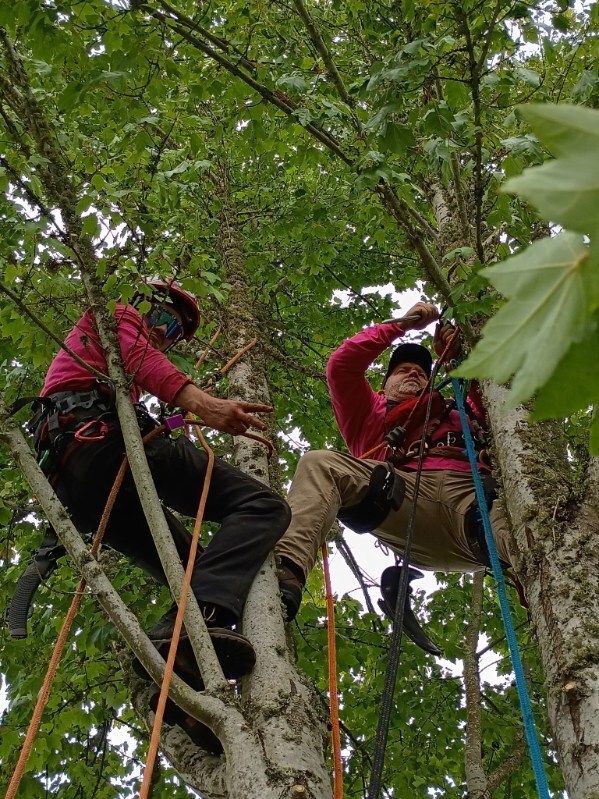
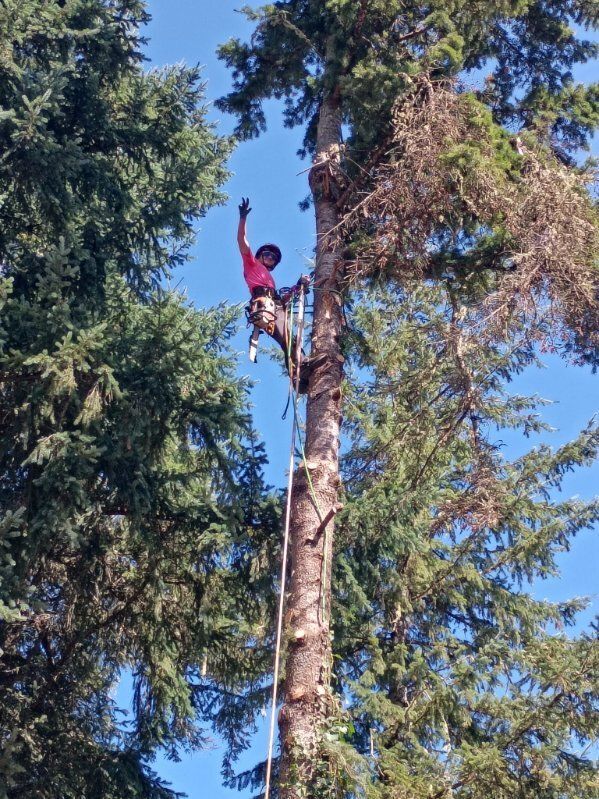
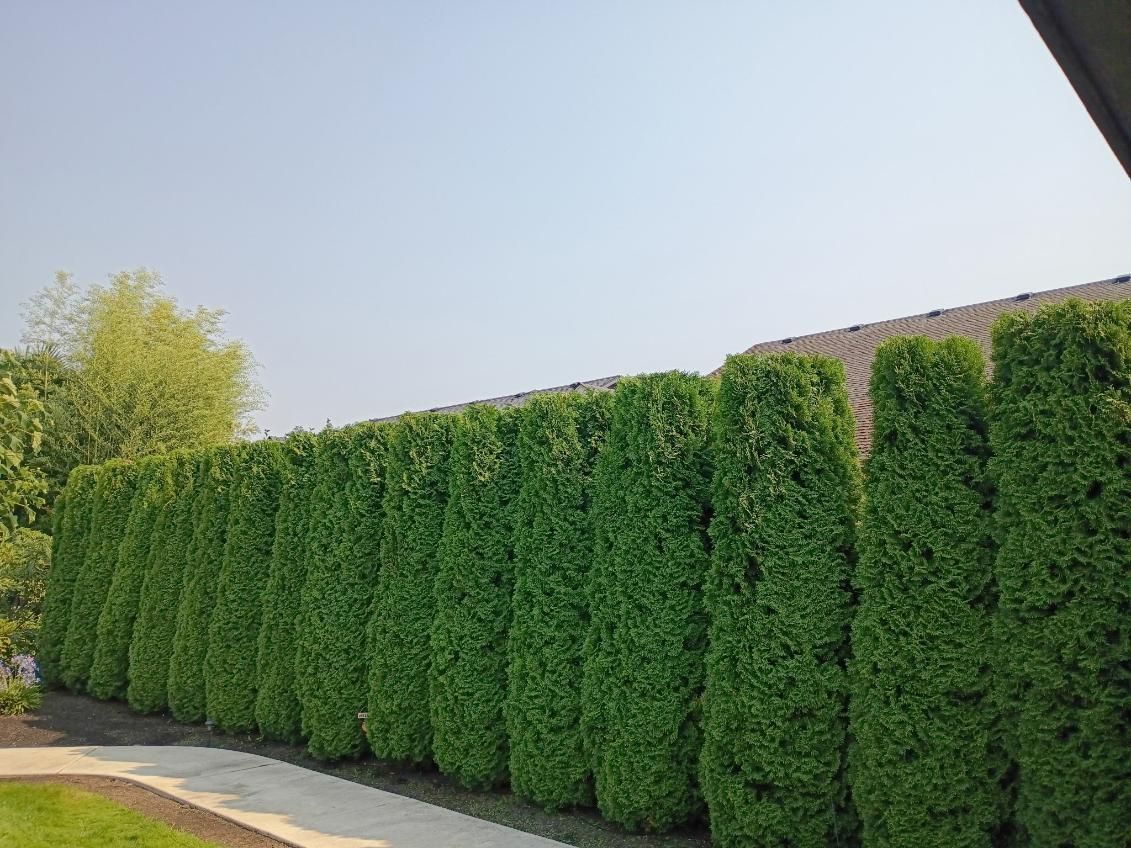
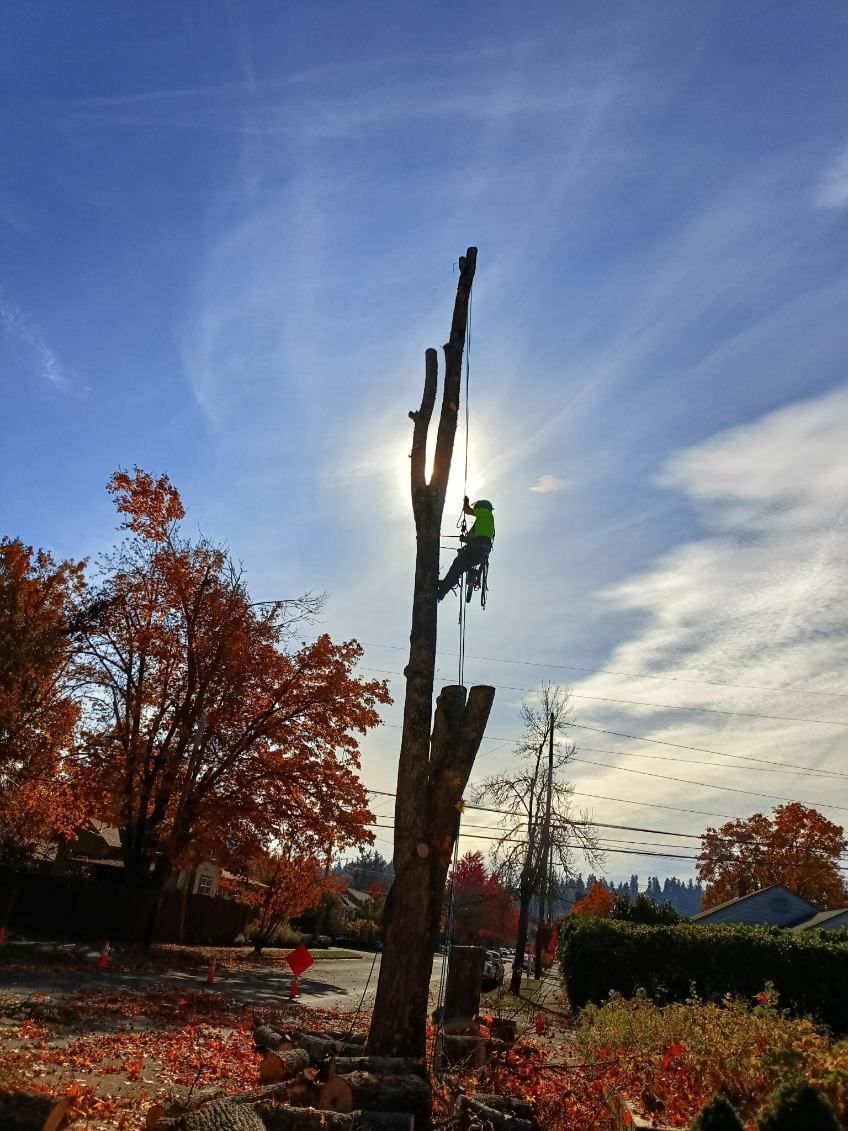
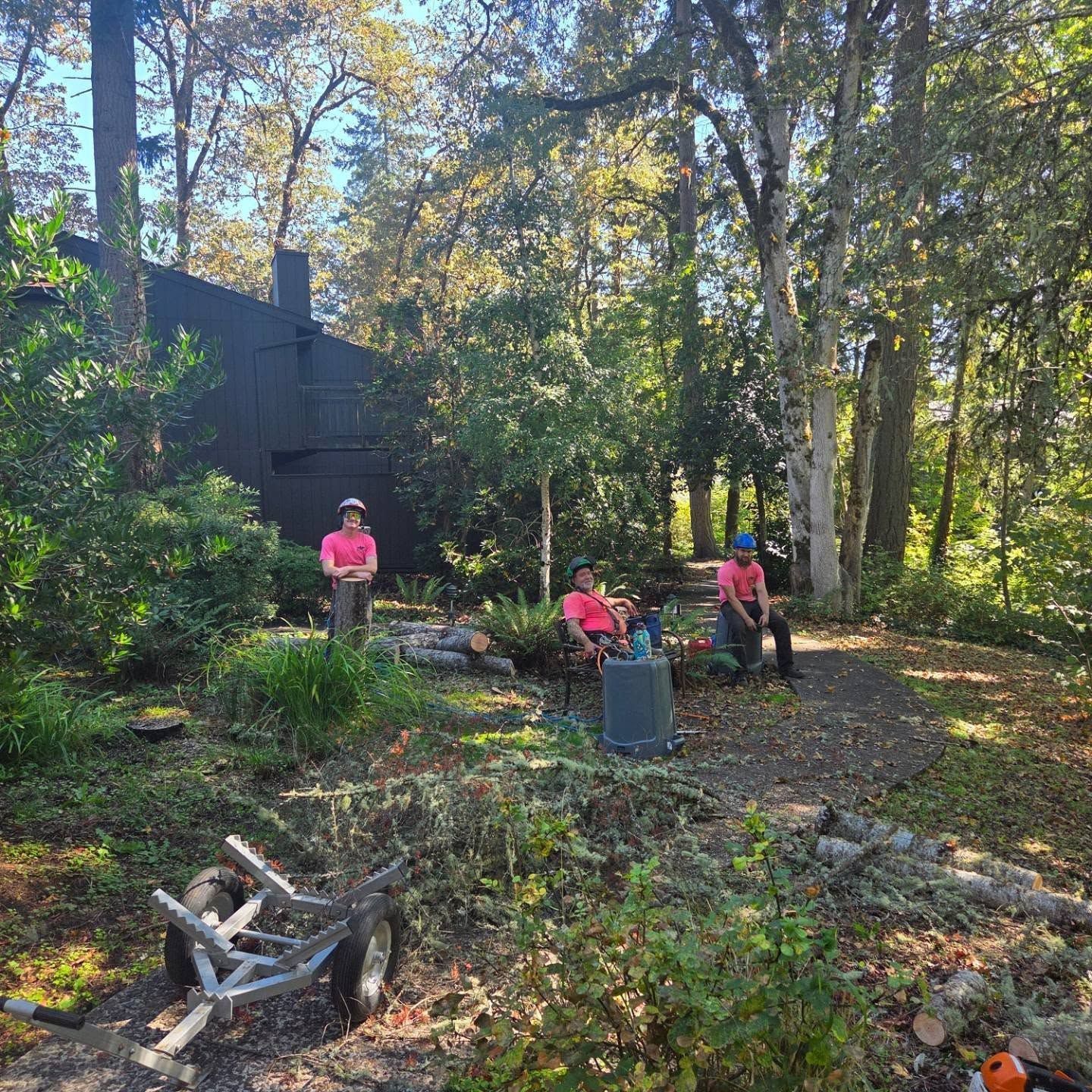
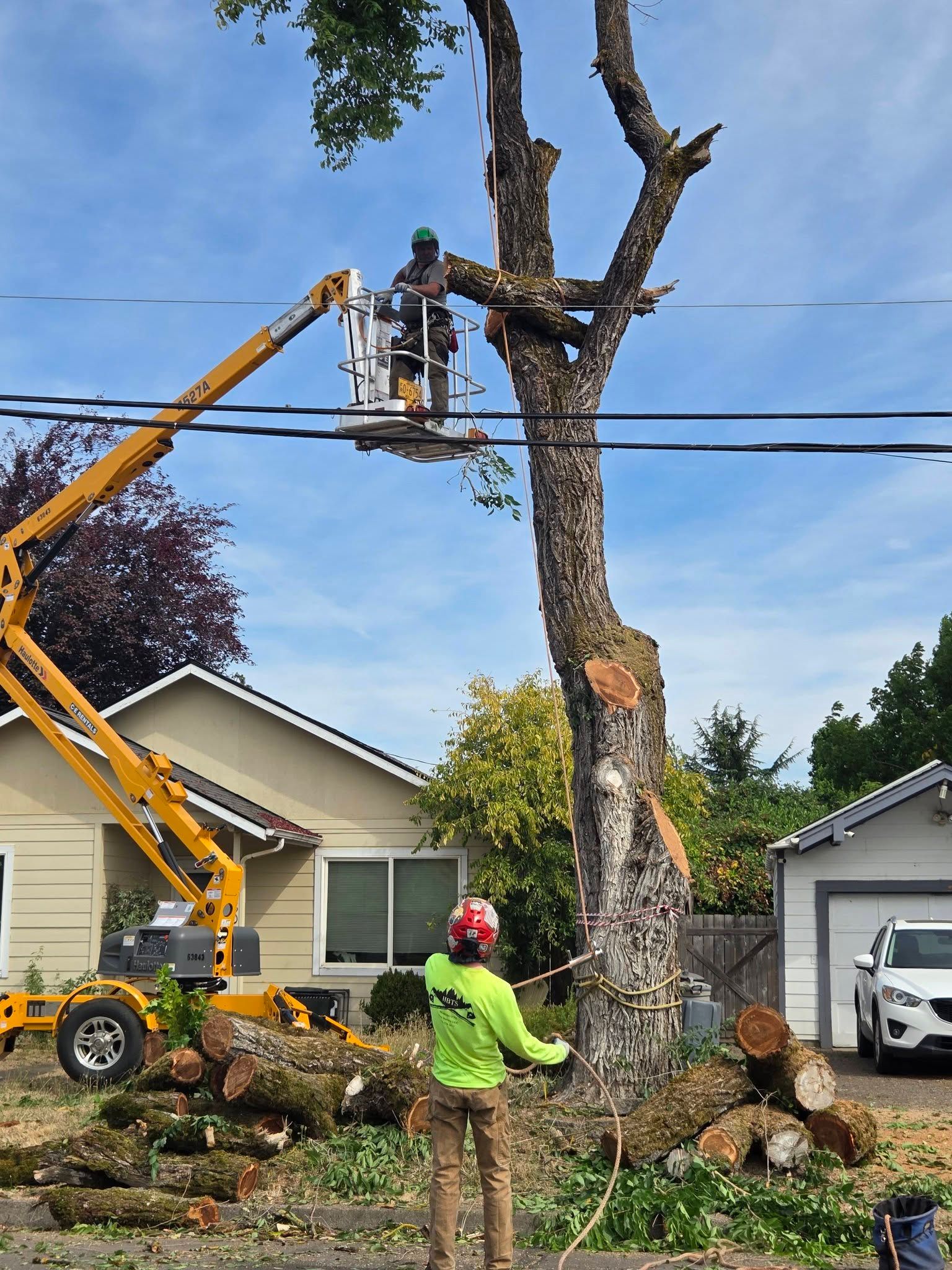
See Our Tree Work Around Lane County
Every photo here comes from a real HornButte job, from rope-climbing removals on tall firs to neatly shaped arborvitae along a backyard walkway. Browse our tree work photo gallery to see how our crew sets up, climbs and cleans up on jobs across Eugene, Springfield and the surrounding hills.
Areas we serve
Where Do We Provide Tree Services in Lane County?
From our home base in the Lowell and Fall Creek area, we travel throughout Lane County, from the neighborhoods of Eugene, Oregon and Springfield to the rural hills along the Middle Fork Willamette and McKenzie rivers. Choose your community below, or browse all Lane County service areas we cover.
Mon to Fri 8:00 AM to 5:00 PM
Weekends by appointment
24/7 emergency service
Get in touch
Have Questions About Your Trees?
Talk with Jaymie about removal, pruning, land clearing or tree health. Quotes are always free, and we are happy to explain your options before any work begins.
Emergency tree removal available. Free quotes for every project.
Common questions
Tree Service Questions We Hear Most
Straight answers to the questions Eugene and Springfield homeowners ask before they hire a tree crew. You will find dozens more answers in our full tree care FAQ covering scheduling, pruning, land clearing and tree health.
How much does tree removal cost in Eugene, Oregon?
Every tree is different, so we price each job after Jaymie sees it in person. Height, lean, what sits underneath, access for our climbers and how much cleanup you want all shape the quote. The estimate is free, and we often offer more than one option. Learn what goes into the work in our tree removal services overview before you request a free estimate online.
Can you save my tree instead of removing it?
Often, yes. We look at saving a tree first. Removing deadwood, thinning a crowded crown or reducing weight on long limbs can make a tree safer without cutting it down. A tree health assessment is a smart first step when you are unsure whether a tree can be kept.
Do you handle emergency tree removal after storms?
Yes. Emergency tree removal is available around the clock when wind, ice or heavy rain brings a tree down on a home, vehicle, fence or driveway. Our crew makes the situation safe first, then removes the tree in controlled sections. See how storm damage tree cleanup works after winter storms in the southern Willamette Valley.
What areas of Lane County do you serve?
We are based in the Lowell and Fall Creek area and work throughout Lane County, including Eugene, Springfield, Lowell, Fall Creek, Dexter, Pleasant Hill, Creswell and Cottage Grove, plus many rural communities along the McKenzie and Middle Fork Willamette rivers. Check the full list of communities we serve in Lane County to find your town.
Are you licensed, bonded and insured?
Yes. HornButte Tree Service LLC is licensed with the Oregon Construction Contractors Board, bonded and insured. Any tree company working on your property should be able to show proof of coverage, and we are glad to talk about ours at your estimate. You can also read what neighbors say in our customer reviews from Google.
When is the best time to prune trees in Lane County?
Late fall through winter, while most deciduous trees are dormant, is a good window for structural pruning because branches are easy to see and the tree is resting. Dead, broken or hazardous limbs can be removed any time of year. Learn more about tree crown thinning and the other tree trimming and pruning services we offer.
Do you offer land clearing for rural property?
Yes. We clear brush, saplings, blackberry thickets and unwanted trees from house lots, pastures and overgrown acreage so you can build, plant or simply use your land again. We mulch material when we can. See our land clearing services for details on what each project includes.
Do you offer any discounts?
Yes. Ask about our senior and military discounts when you schedule your free quote, and Jaymie will explain how they apply to your project at the estimate. You can start by sending a few details through our free estimate request form today.